Greenville Garage Door Guide
Is Your Older Greenville Garage Door Worth Repairing?
Most Greenville doors date to the 1965-2001 building wave. Here's how to tell if yours is worth repairing or if you're throwing money at a door that's done.
Where People Go Wrong
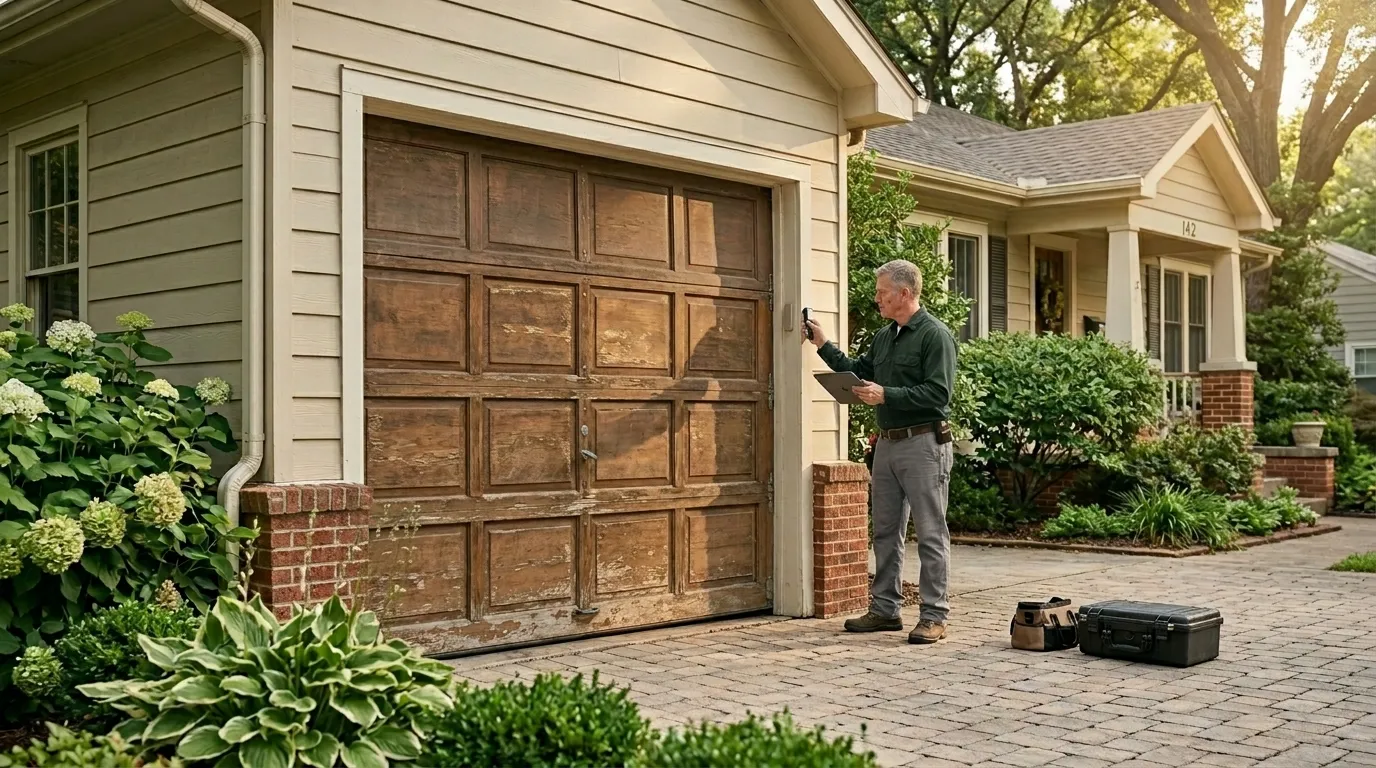
The most common mistake we see is homeowners treating every garage door problem the same way, whether the door went up in 1968 or 1998. Most of the housing stock in this area was built between 1965 and 2001, with a heavy concentration around 1974, and that range covers a lot of different hardware, spring types, and panel materials. A door from the early wave and one from the late-90s wave don't fail the same way or cost the same to keep alive.
We get calls where someone has already sunk money into a new opener on a door whose track is bent and whose rollers are original steel, decades past due. The opener works fine for six months, then the real problem shows up again because nobody looked at the door itself. The reverse happens too - someone assumes a stuck door means a dead door, when it's a $30 roller.
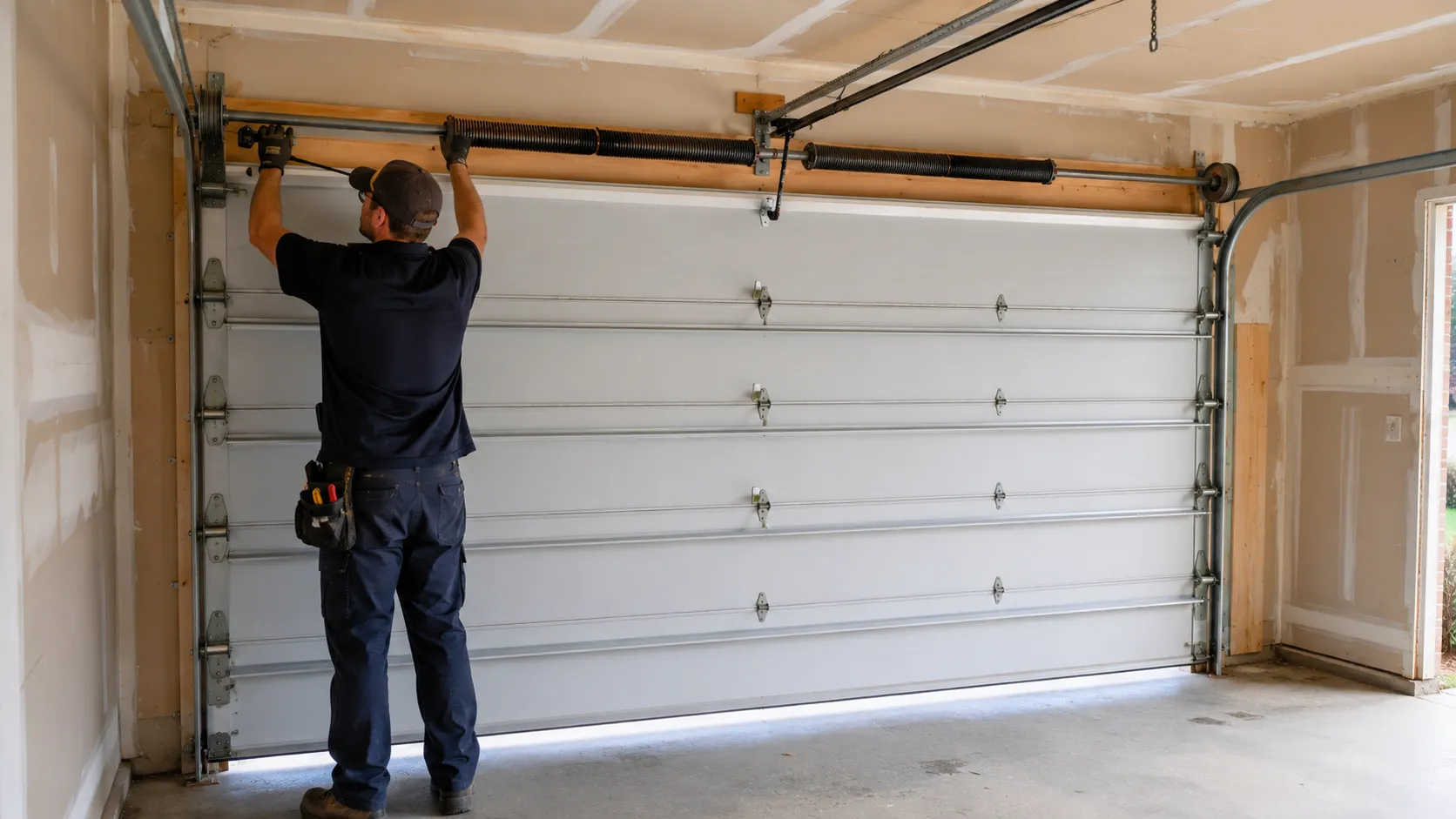
The fix isn't a rule of thumb, it's actually looking at what's failing. A torsion spring that's lost tension is routine on a door this age.
A frame that's rusted through at the bolts, or a panel that's delaminating, is a different conversation. Knowing which one you have before you spend money is the whole game.
What It Costs
We're not going to hand you a number here that doesn't hold up once we're standing in your driveway - door age, panel material, and what's actually broken change the math too much for a flat figure to mean anything. What we can tell you is how people in this area tend to decide.
Median household income here runs $41,711, which is lower than a lot of nearby markets, and it shapes the decision differently than it would somewhere wealthier. A spring replacement or a track alignment is almost always worth doing on a door built in the 1965-2001 range - the labor is the same whether the door is new or old, and the door itself still has life left. Where it stops making sense is when the repair bill starts approaching what a new door costs, which happens more with panel replacement or a full torsion conversion than it does with springs, cables, or rollers.
We'll tell you flat if a repair is a bad bet. We'd rather lose the job than have you call us back in a year for the same door.
What Local Conditions Do
This area sits in a cold-moderate climate band, not a coastal or desert one, and that matters for what actually wears out on a garage door here. We're not fighting salt corrosion or extreme heat cycling. What we see instead is straightforward mechanical fatigue - torsion springs that have wound and unwound through enough winters that the steel just gives out, and hardware on doors from the 1965-2001 building wave that was never rated for the cycle count it's now hit.
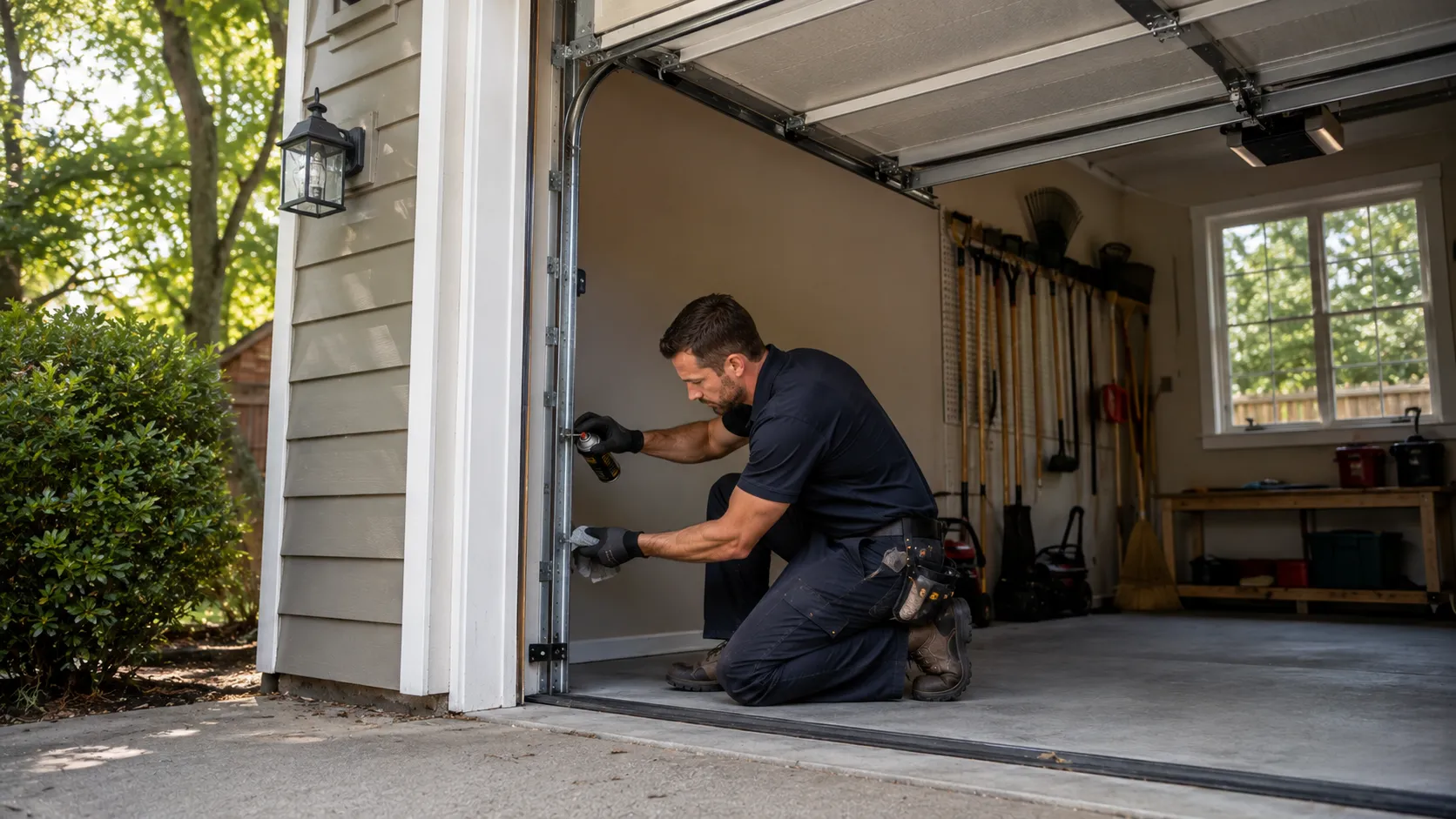
Cold snaps stiffen the lubricant in older rollers and hinges, which is why a lot of our winter calls are doors that worked fine in October and started grinding in January. That's not a sign the door is dead. It's usually a sign nobody's greased the track in ten years.
What we don't see much of here is wind-load failure or rust-through from humidity the way you'd get closer to the coast. That's actually good news for anyone weighing repair versus replacement - the bones of an older door in this area are more likely to still be sound than the surface wear suggests.
The Problem
A door built during the 1974-era wave of construction that dominates this area typically has thinner steel skins, no insulation, and side-mounted torsion hardware that newer doors don't use. None of that makes the door bad. It makes it a different animal to service than something installed after 2001, and it means parts availability is the real question, not whether the door 'looks old.'
Across the 17,255 households in the areas we cover, only 8,732 are owner-occupied houses, and that split matters for how repair decisions get made - a homeowner staying put for years has a different calculus than a landlord looking for the cheapest patch before a tenant turnover. We see both, and we quote both the same way: what's actually wrong, what it takes to fix it right, and whether that number makes sense against a replacement door.
The honest limit here is that we don't stock every panel style for doors from the older end of that range - some of those styles simply aren't made anymore, and matching a single damaged panel can mean a wait or an admission that patching won't look right.
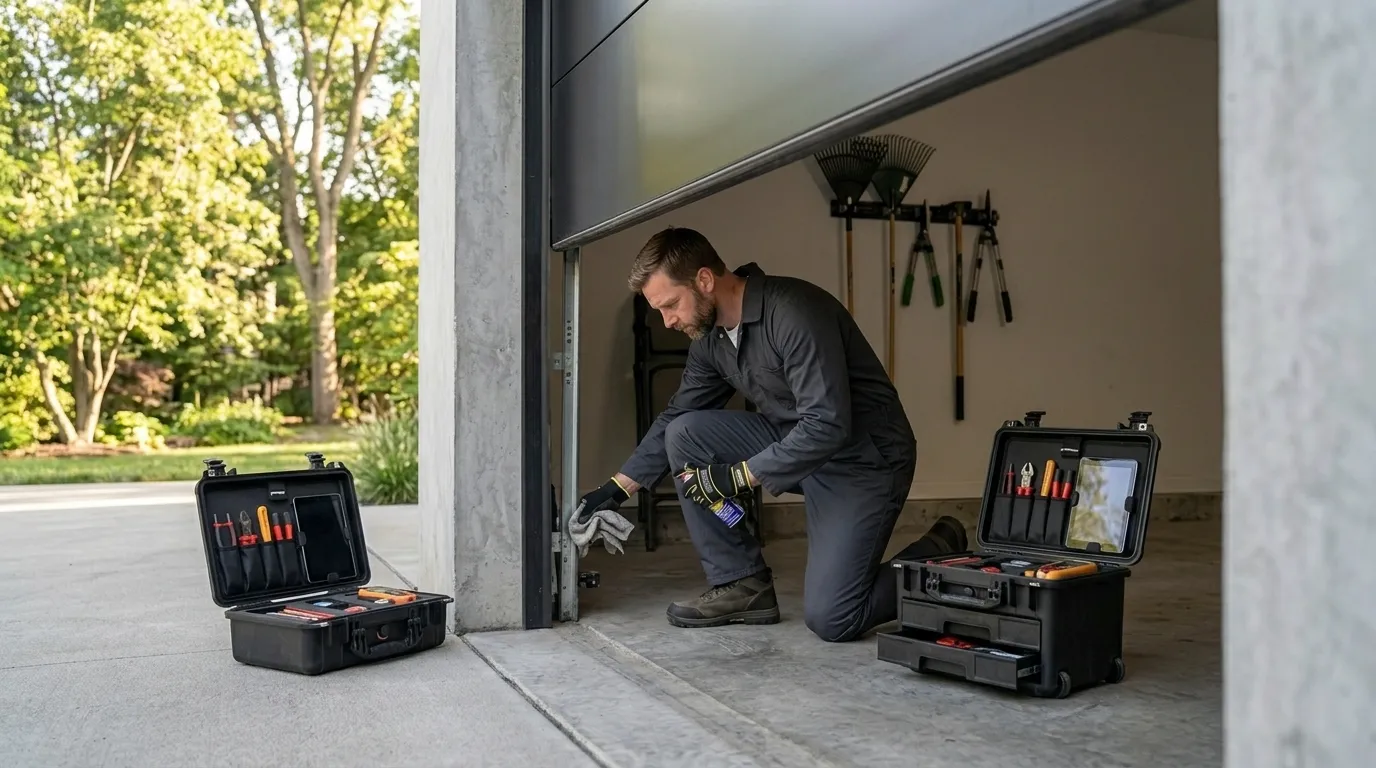
How We Can Help
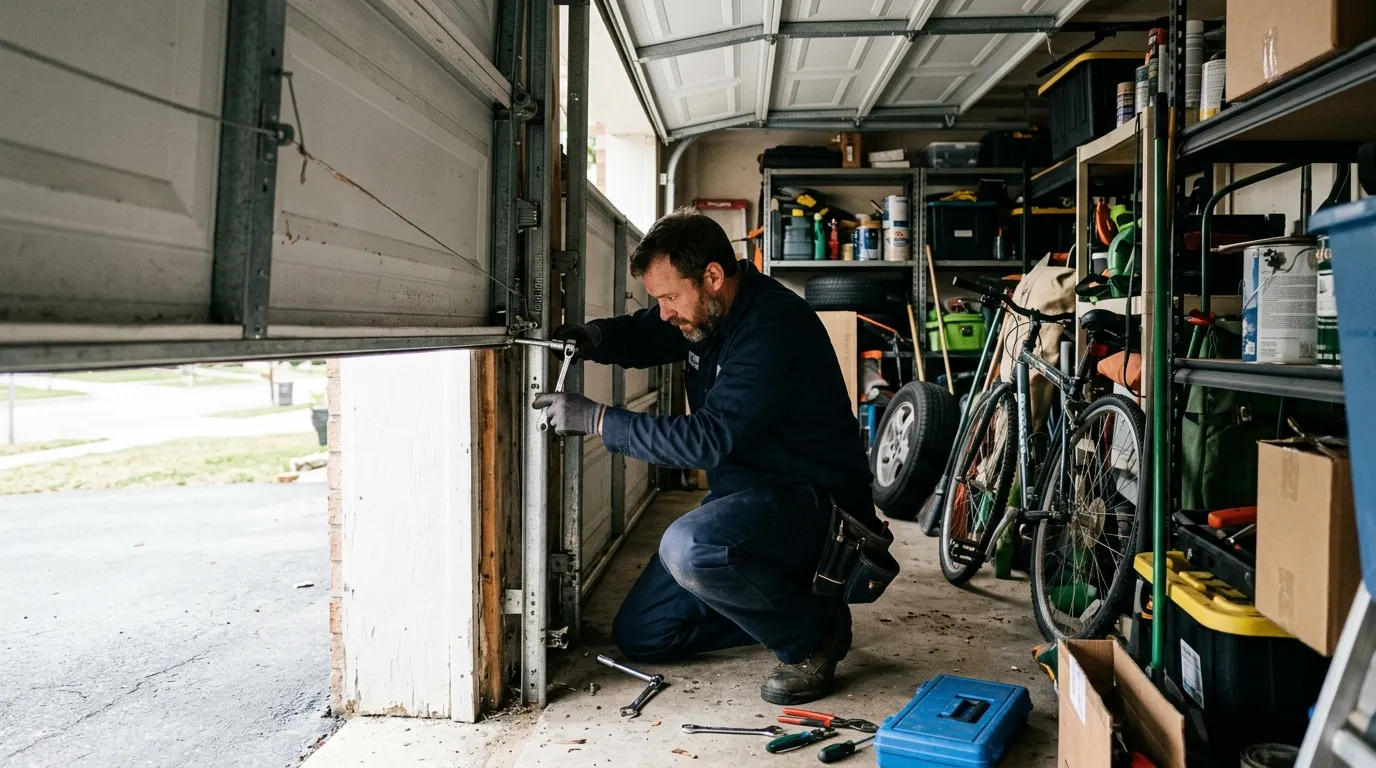
Garage Door Repair
Springs, cables, tracks, rollers, and openers fixed by a tech who explains the problem before touching anything.
Learn more →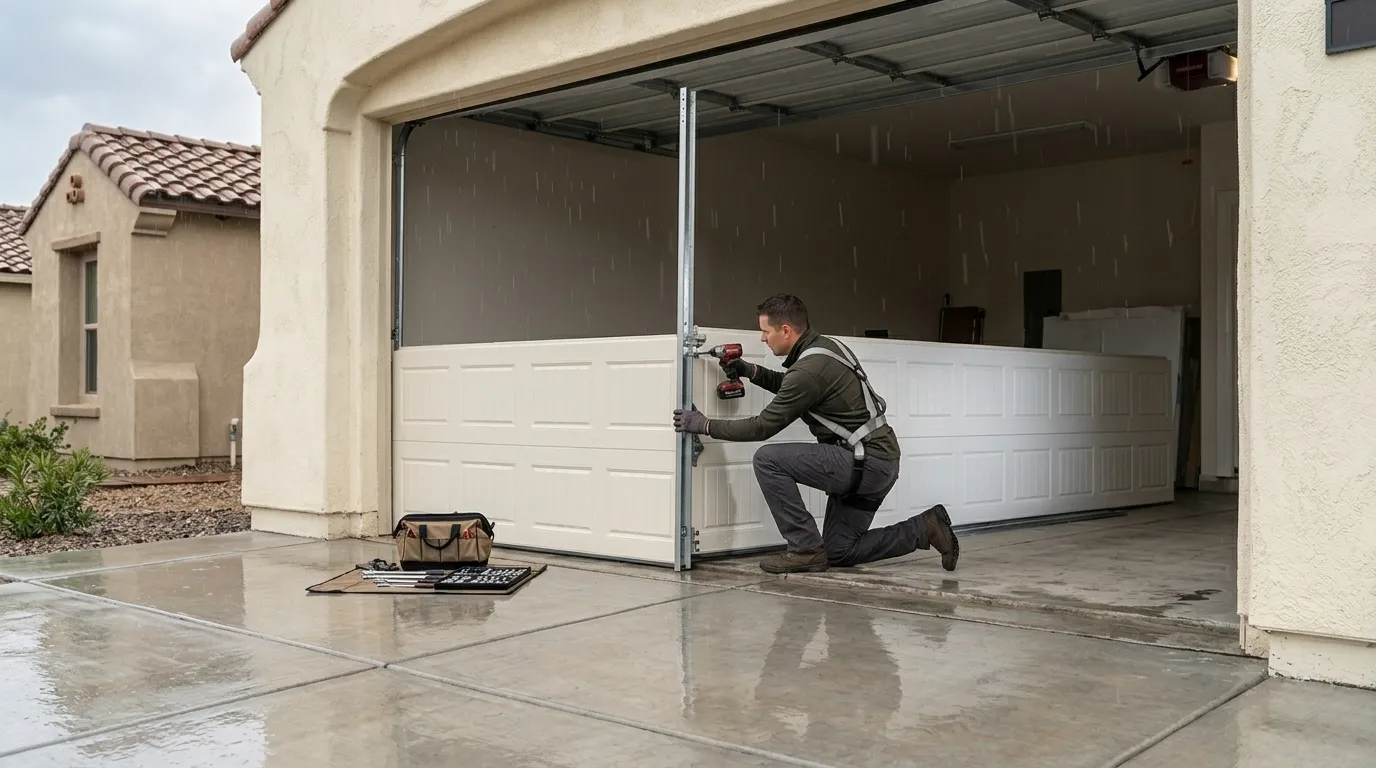
Garage Door Installation
New sectional doors sized and installed for the housing stock actually built in this area.
Learn more →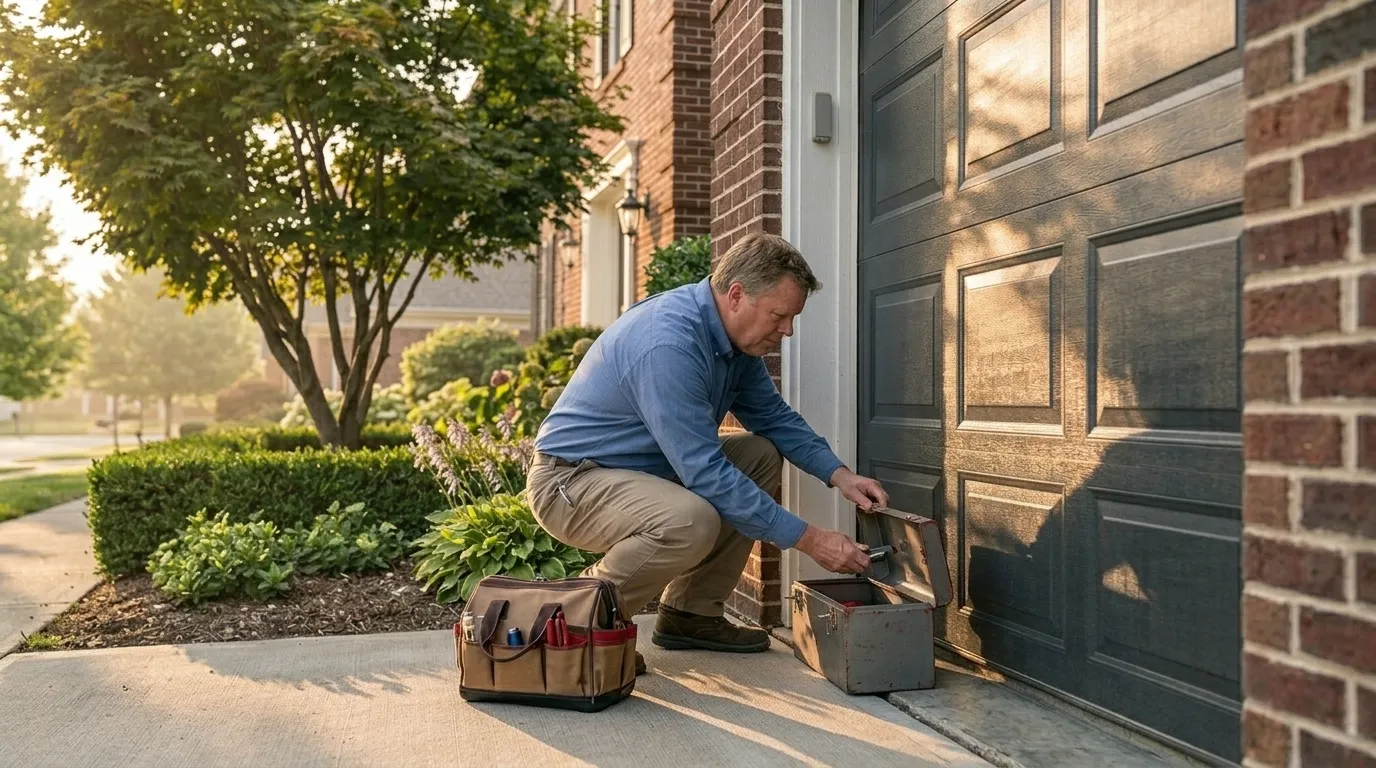
Garage Door Service
Tune-ups, lubrication, and safety checks that catch a small problem before it becomes a service call.
Learn more →Frequently Asked Questions
My garage door is from the 1970s. Is it too old to repair?
Not on its own. Age alone doesn't disqualify a door - a lot of the doors built in this area's 1965-2001 wave are structurally fine and just need spring, roller, or track work. What matters is what's actually failing. If the panels are rusted through or delaminating, that's a different call than a worn spring.
Why did my door get harder to open this winter?
Cold stiffens the grease in older rollers and hinges, and in a cold-moderate climate like ours that shows up every winter on doors that were fine in warmer months. It's usually a lubrication and hardware issue, not a sign the door is failing.
Should I replace instead of repair?
It depends on what's broken and what the door is worth once fixed. Spring, cable, and roller repairs are almost always worth doing on a sound older door. If the repair bill starts closing in on the cost of a new door, especially with panel damage, replacement usually makes more sense.
Can you match a panel on my older door?
Sometimes, but not always. Panel styles from the earlier end of the 1965-2001 building range aren't all still manufactured, so matching one damaged panel can mean a wait or, in some cases, isn't possible without replacing more than just that section.
Have a Door That Needs a Second Opinion?
Call and describe what it is doing - we will tell you what it likely is.