
Greenville Garage Door Guide
That Noise Your Garage Door Is Making Isn't Random
Grinding, popping, or banging garage doors in Greenville homes usually trace back to 1960s-70s hardware. Here's what the noise is telling you and when it matters.
Where People Go Wrong
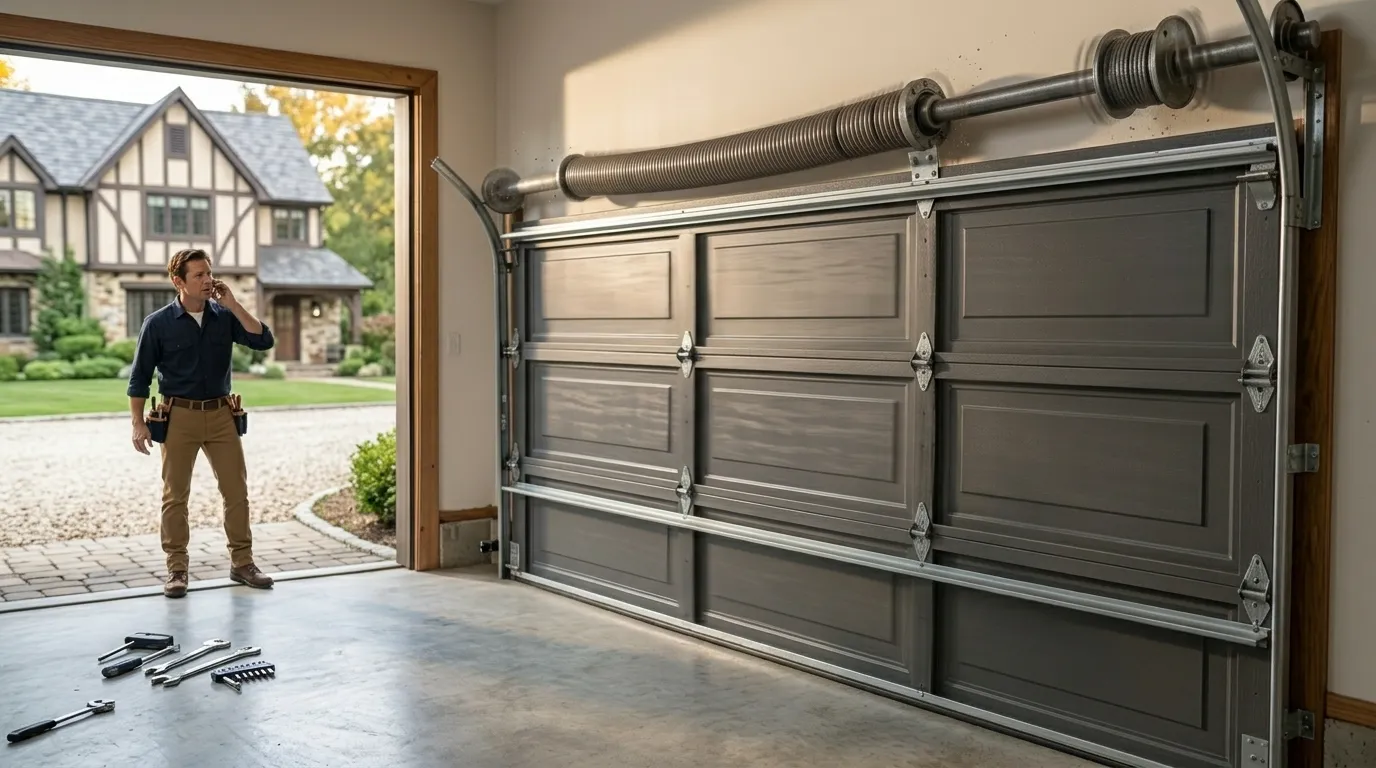
The mistake we see most in Greenville is treating a noisy door like background static instead of a warning. A lot of houses out here - across Meadowbrook, the Medical District, and the older sections toward North Ridge - went up between 1965 and 1974, when builders ran extension springs on steel tracks bolted straight to the framing. That hardware is now 50-plus years old in a lot of cases, and it doesn't fail quietly.
It squeals, then pops, then bangs. Homeowners hear the squeal, spray some lubricant on the track, and call it fixed. That buys you a few weeks, not a repair.
The other habit that costs people money is waiting for the door to stop working entirely before calling anyone. A door that groans on the way up usually has a roller or hinge that's already partway gone.
Left alone, that same wear starts pulling the track out of alignment, and now you're paying for track work instead of a $20 roller. If your house falls in that 1965-2001 build window that covers most of this area, the noise is diagnostic information, not an annoyance to tune out.
What It Costs
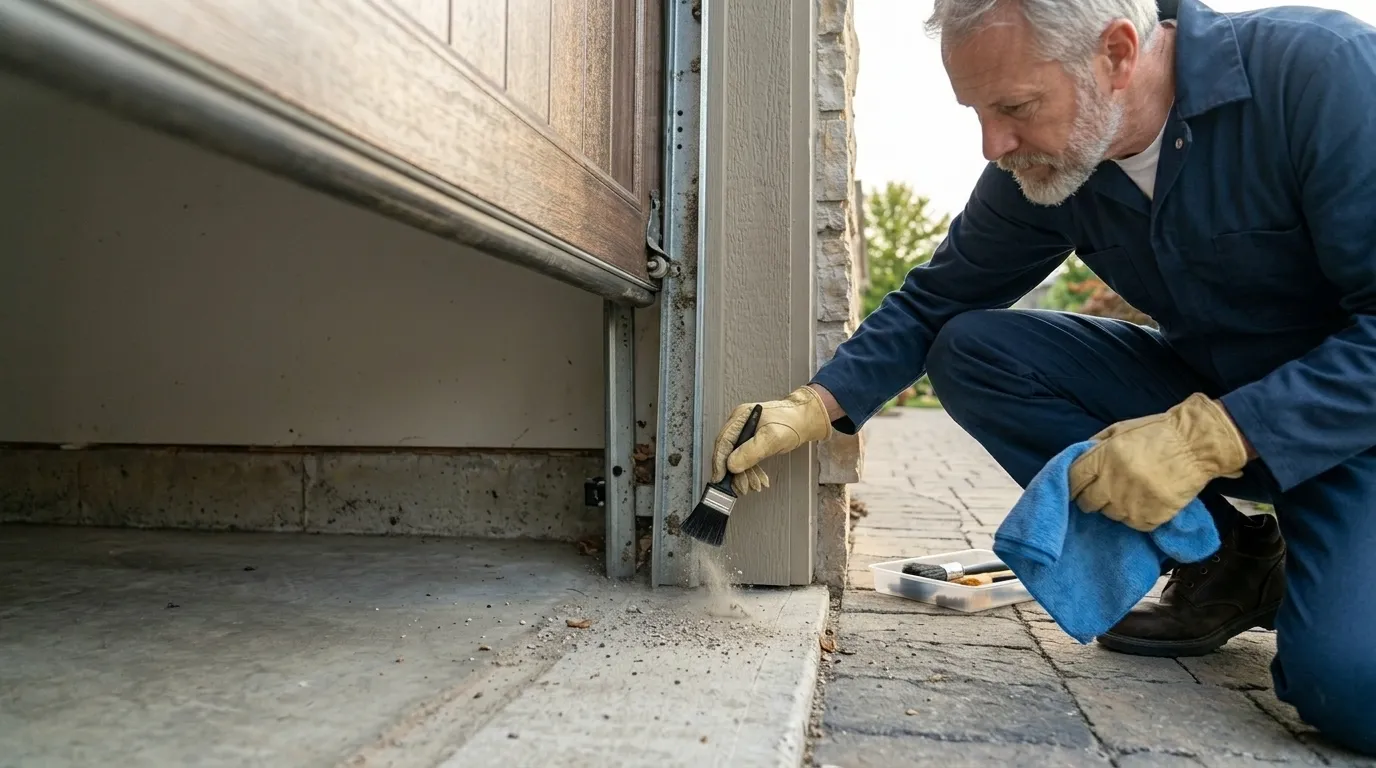
We don't have a price list to hand you here, and we're not going to guess one - every job depends on what's actually worn versus what's about to fail next to it. What we can tell you is how the decision usually gets made in a service area where median household income runs around $41,711: most owners want the cheaper fix first, and that's reasonable, but on a door from the 1965-1974 stretch, a single roller replacement often turns into a track adjustment once we're up on the ladder, because the wear rarely shows up in just one part.
The honest version: if your door is original to a house built in that mid-1970s window, patching one noisy component at a time can end up costing more over a year than replacing the aging hardware set once. We'll always quote you the smaller fix if it's genuinely enough. We just won't tell you it's the last repair you'll need when the rest of the hardware is the same age.
What Local Conditions Do
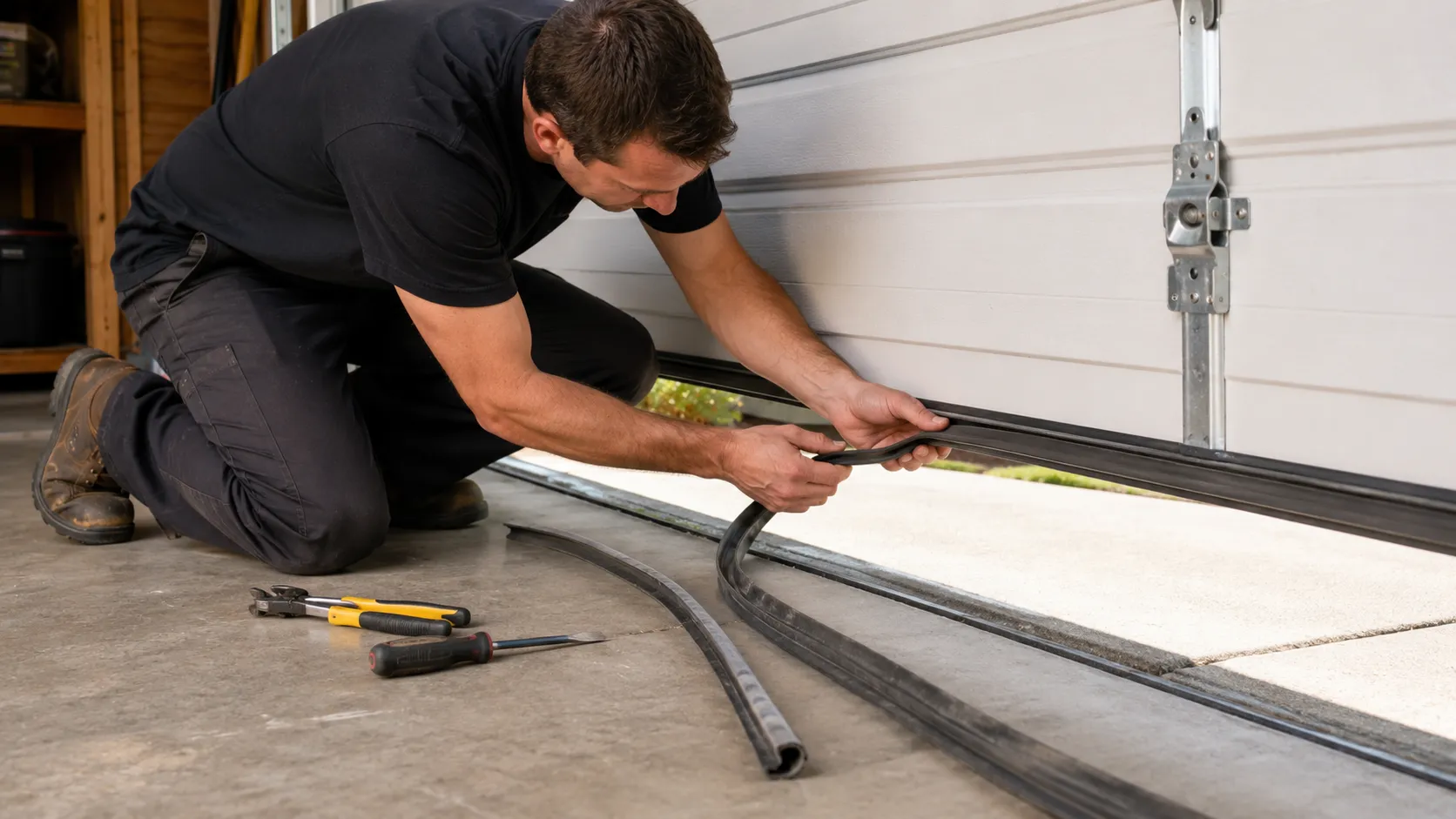
Greenville sits in a cold-moderate climate band, which means the swing that matters isn't extreme heat or extreme cold - it's the repeated freeze-thaw and humidity cycling through the shoulder seasons. Steel track expands and contracts with that swing, and on a door that's original to a 1960s or 70s build, the bolts holding that track to the jamb have loosened a fraction of a turn more each cycle for decades. That's where the rattle on a windy morning comes from - not a design flaw, just cumulative movement.
Humidity does its own damage to hardware that was never galvanized to modern standards. Springs and hinges from that era pit and rust from the inside of the coil out, so a spring can look fine and still be down to half its rated cycles. None of this is dramatic weather - Greenville doesn't get the kind of extreme cold that snaps springs outright - but the slow, steady cycling is exactly what wears older, non-torsion hardware down faster than newer doors see.
The Problem
A grinding sound usually means a roller that's worn past its bearing and is now metal-on-metal against the track. A rhythmic thump on the way down is almost always a flat spot on a roller or a bent track section, and it gets louder, not better, over time. A loud bang followed by the door refusing to move is very often a broken spring - on the extension-spring setups common in this area's older housing stock, that's a sudden, complete failure rather than a slow one.
We'll be straight about the limit here: we can tell you a lot from a phone description, but we can't diagnose a specific door's hardware without seeing it. Two doors built the same year in the same neighborhood can be worn completely differently depending on how often they've been used. If you're out toward Winterville or Ayden and your door's making noise it wasn't making six months ago, that's worth a look before it becomes a door that won't open at all.
How We Can Help
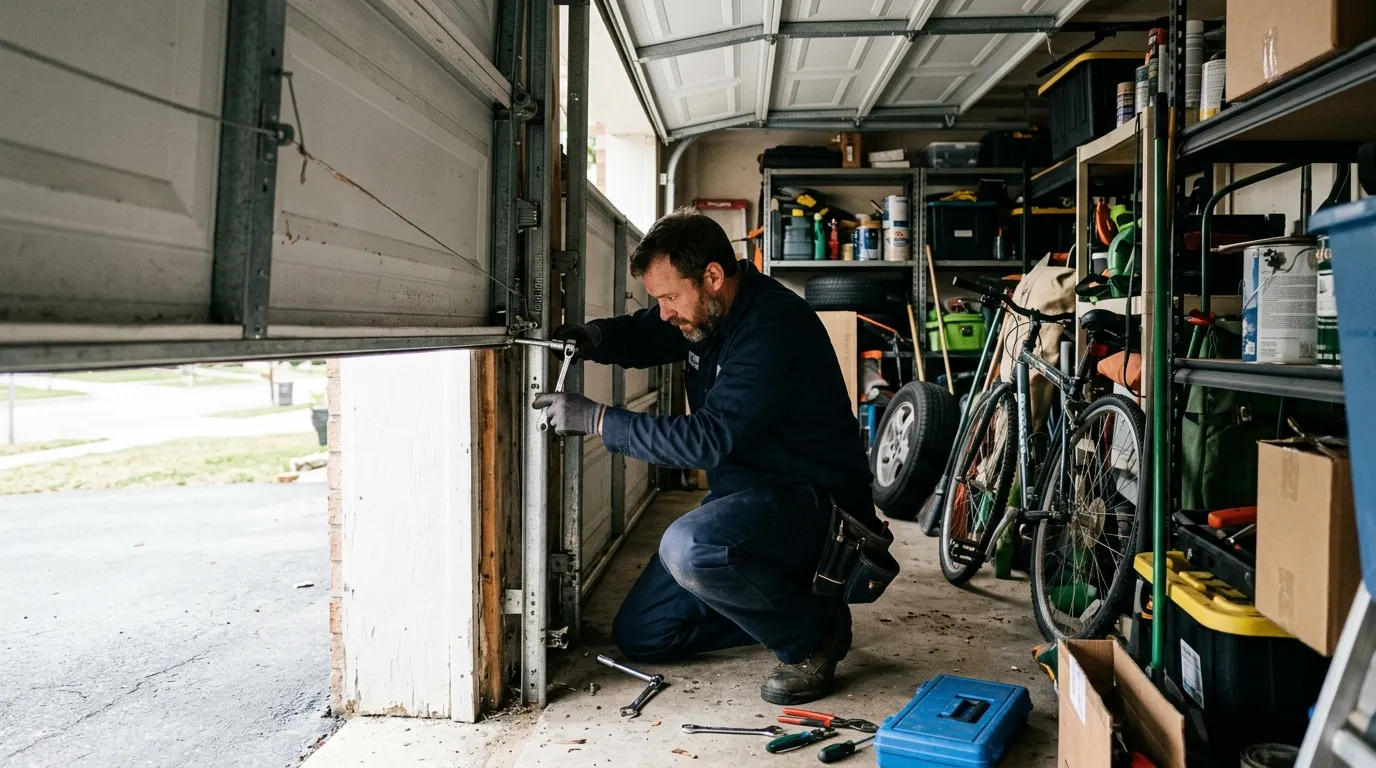
Garage Door Repair
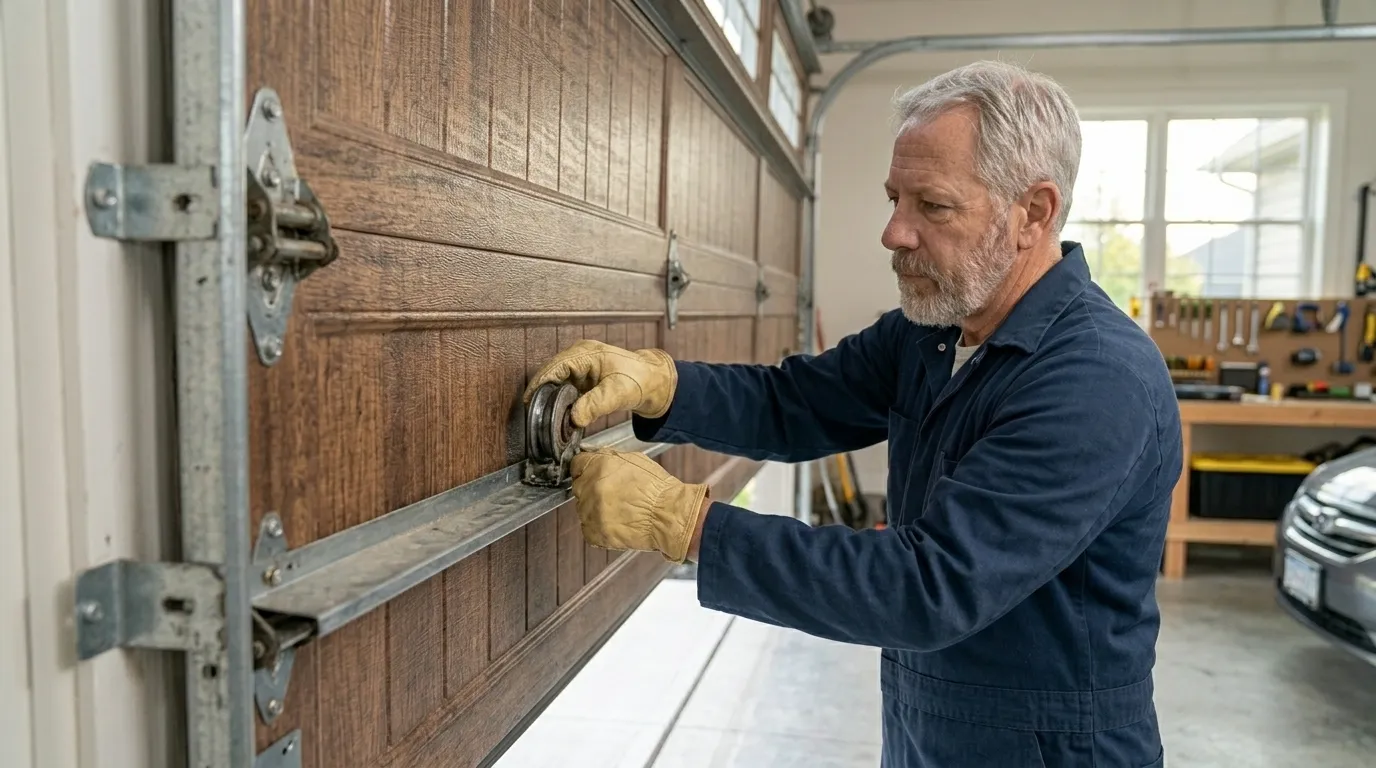
Springs, cables, tracks, rollers, and openers fixed by a tech who explains the problem before touching anything.
Learn more →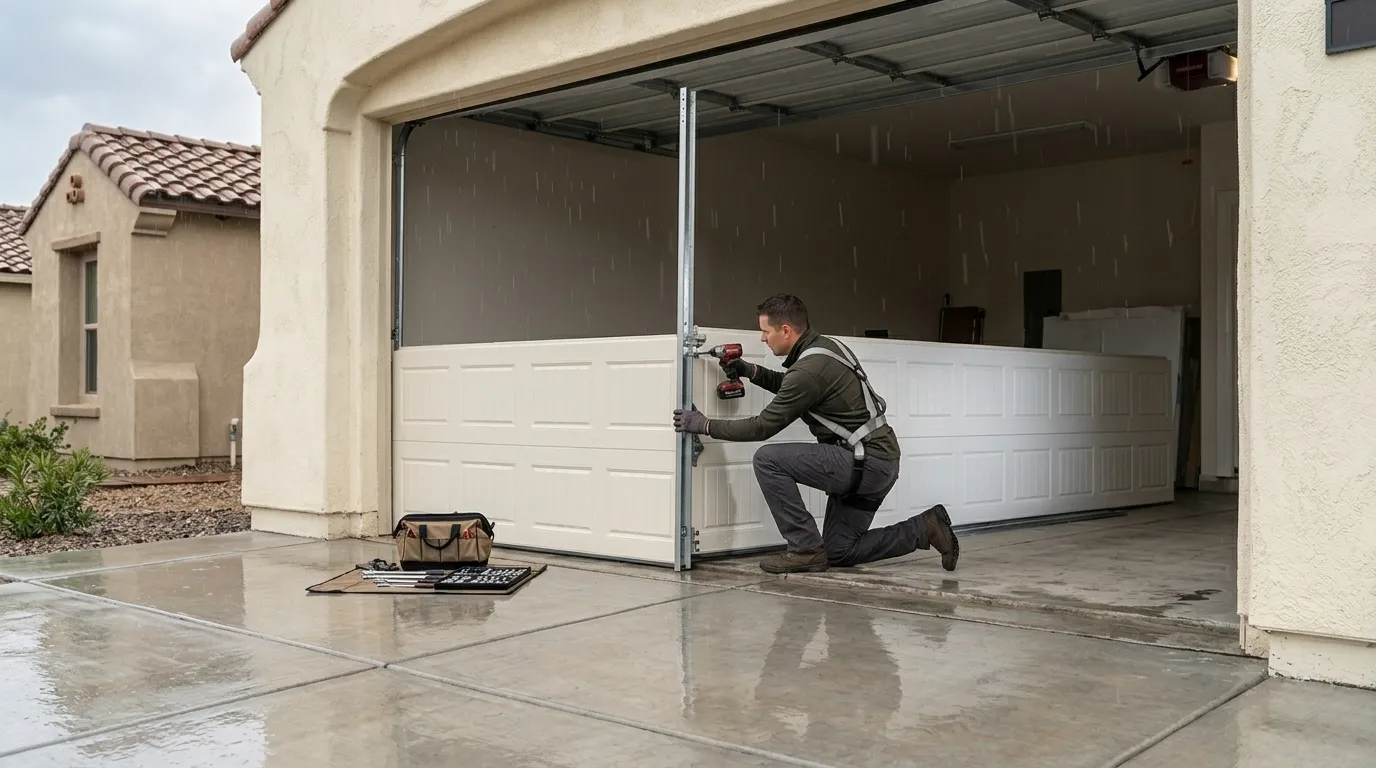
Garage Door Installation
New sectional doors sized and installed for the housing stock actually built in this area.
Learn more →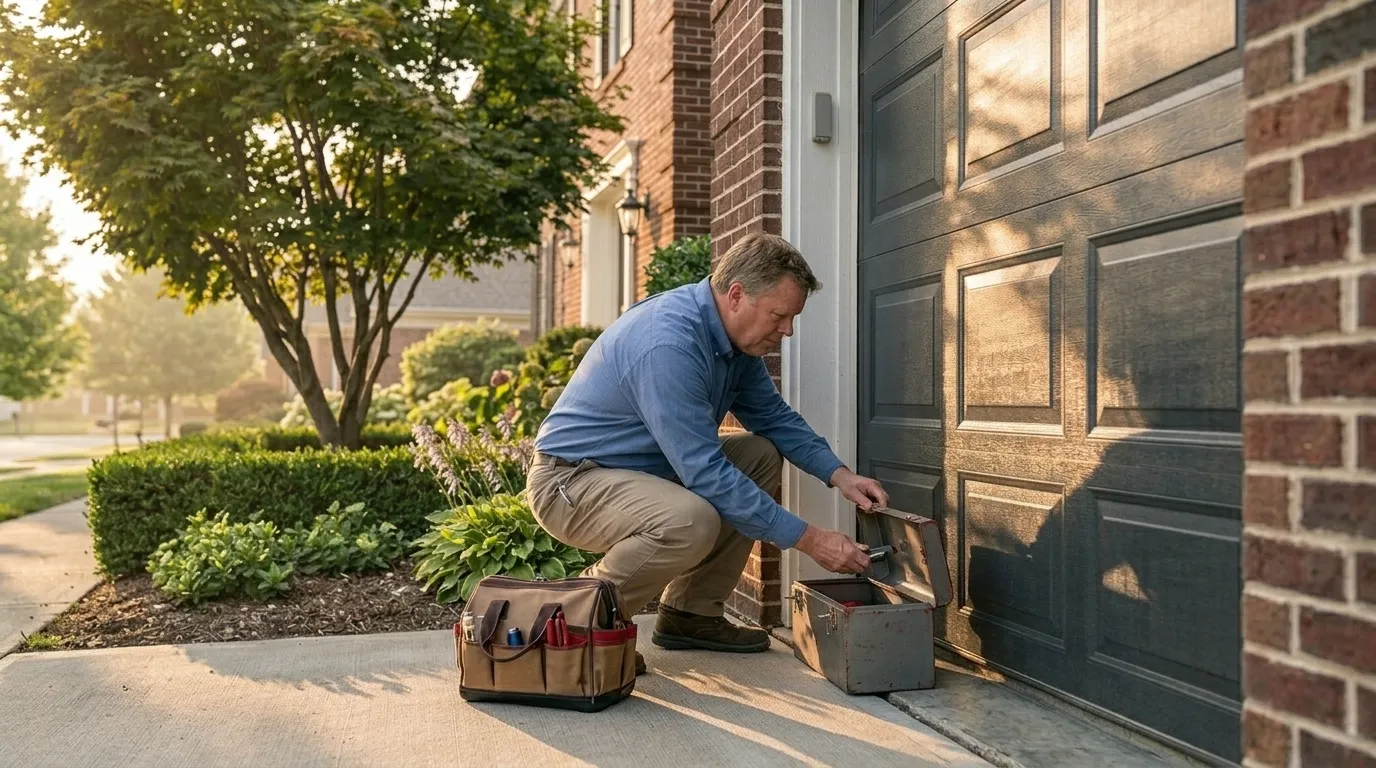
Garage Door Service
Tune-ups, lubrication, and safety checks that catch a small problem before it becomes a service call.
Learn more →Frequently Asked Questions
My garage door squeals every time it opens. Is that serious?
Not usually an emergency, but it's not nothing either. On the 1960s-70s hardware common in this area, a squeal is almost always a roller or hinge losing its lubrication or wearing out. Left alone through a few more freeze-thaw cycles, that same wear tends to pull the track slightly out of line, which is a bigger job than a roller swap.
Why does my door make more noise in winter?
Steel track contracts in cold and expands as temperatures climb back up, and Greenville's cold-moderate climate means that cycle repeats often through the season. On older doors, the bolts holding track to the frame have usually loosened slightly over the decades, so that seasonal movement shows up as new rattling or popping that wasn't there in summer.
Is a banging noise a broken spring?
Often, yes, especially on extension-spring setups common in Greenville's 1965-1974 housing stock. A loud bang followed by the door refusing to lift or feeling heavy is the classic sign of a snapped spring. Stop using the opener at that point - running it against a broken spring can strain the motor and the remaining hardware.
Should I fix the noisy part or replace the whole door?
Depends on the door's age and what else is worn. If your house falls in the 1965-2001 build range typical of this area and the hardware is original, a single repair often uncovers more wear nearby. We'll quote the smaller fix when it's genuinely enough, but we won't pretend it's the last one needed if the rest of the hardware is the same vintage.
Have a Door That Needs a Second Opinion?
Call and describe what it is doing - we will tell you what it likely is.