
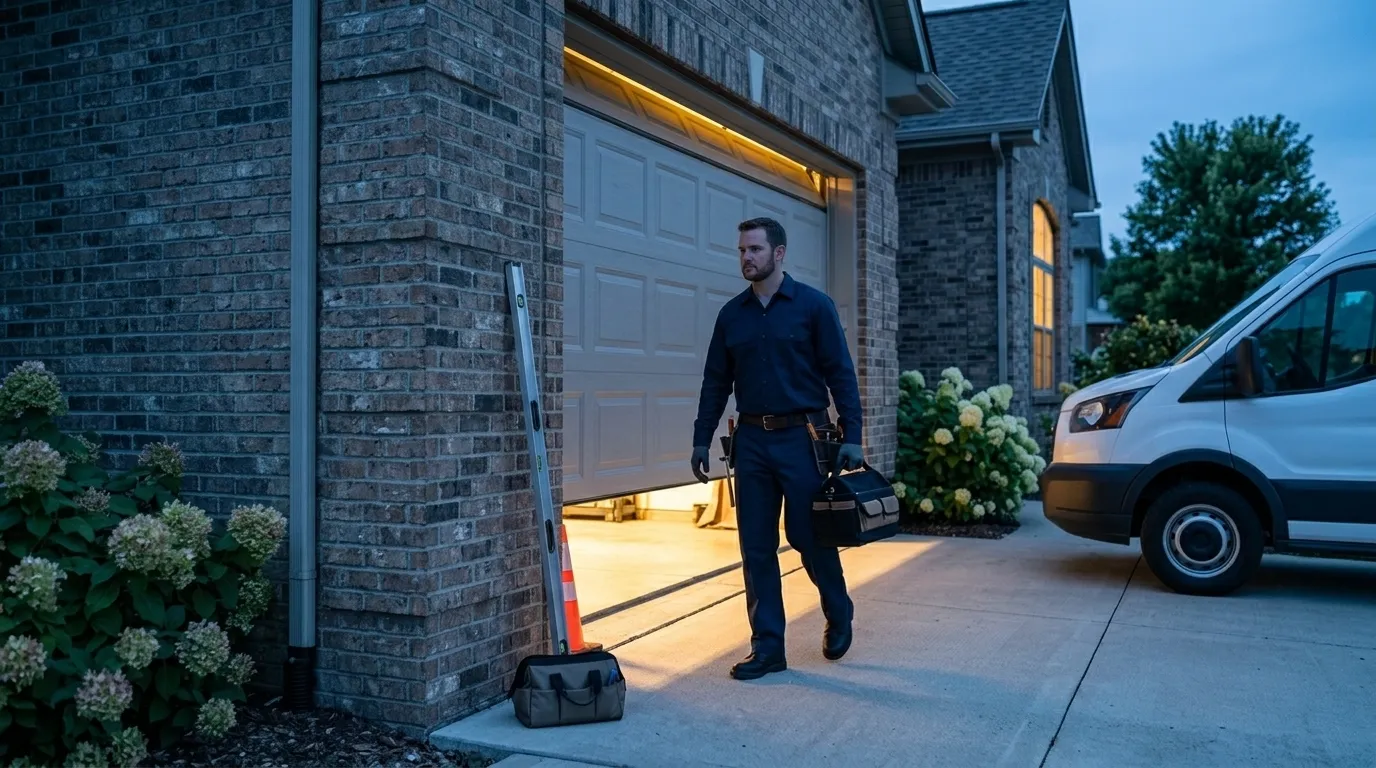
Maintenance & Tune-Up in Washington
Garage Door Maintenance for Washington's 1970-Era Doors
Washington sits 18 miles from Greenville with a garage door stock built mostly around 1970. Here's what that means for tune-ups, parts, and what fails first.
What Happens When You Call
-
1
Call or Request a Quote
Tell us what the door is doing and roughly how old the house is - that alone points us toward the likely part before a truck leaves.
-
2
On-Site Diagnosis
A tech checks the spring, cables, tracks, and opener in person and tells you plainly what is actually wrong.
-
3
Straight Price, No Surprises
You get a number before any work starts. It covers parts and labor, nothing added after the fact.
-
4
Fixed the Same Visit
Most repairs are done in one trip. If a part needs sourcing, we tell you that upfront instead of guessing.
How Long It Takes
Washington is 18 miles out from our Greenville base, the longest run we make on a standing maintenance route. That distance doesn't change what a tune-up covers, but it does mean we schedule Washington visits in blocks rather than one-off same-day calls - if you need a single door looked at on short notice, say so when you book, because we're not staged locally the way we are closer to Greenville. Most maintenance visits run under an hour once we're on site: lubricating rollers and hinges, checking spring tension, tightening the track bolts that back out over years of vibration, and testing the auto-reverse safety sensors.
Doors built around 1970, which is the median here, usually need a bit more time than newer stock because the hardware has had five decades to wear, loosen, or get replaced piecemeal by whoever owned the house before you. We'd rather spend the extra fifteen minutes on site than come back in six months for something we could've caught.
What You Are Seeing
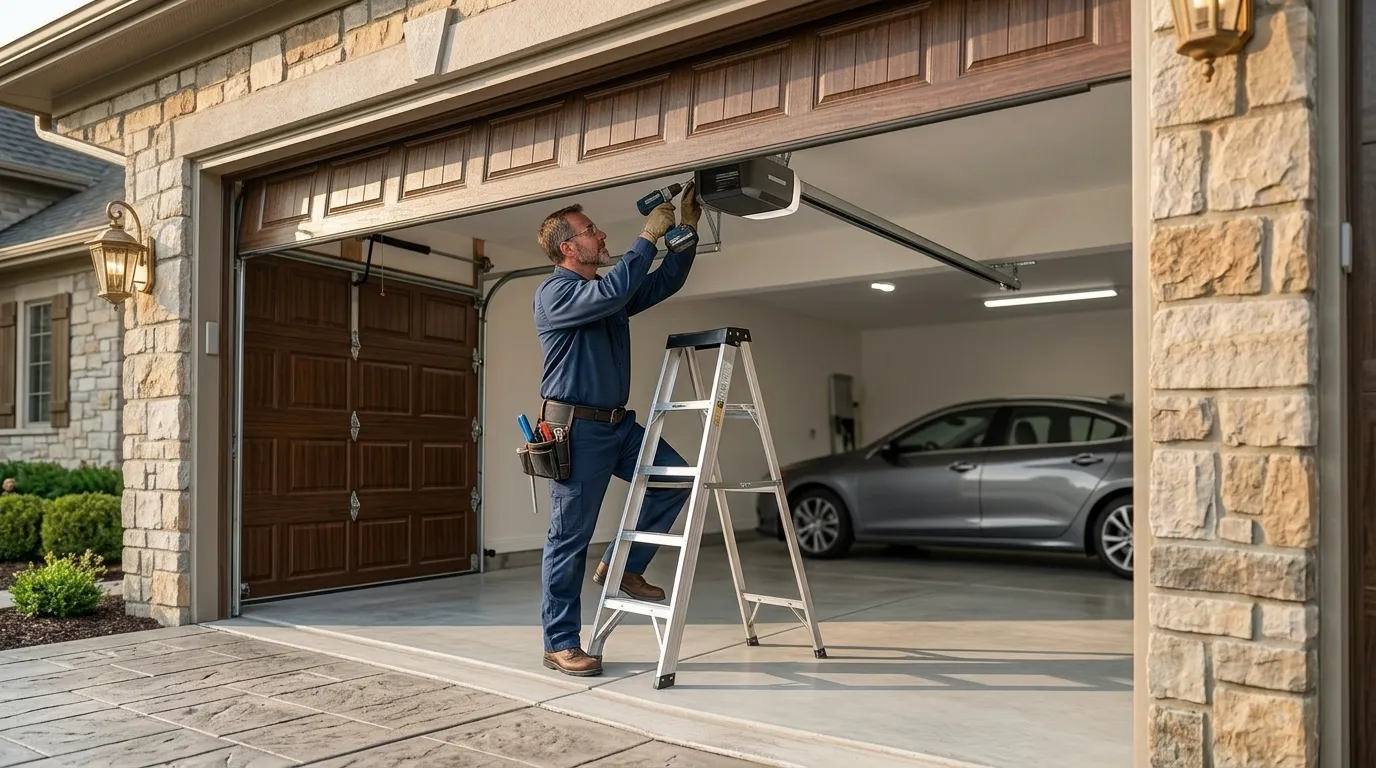
A door from around 1970 in Washington is almost always a single-layer steel panel door, no foam core, hung on steel track that was roll-formed rather than stamped the way most track is now. These doors are heavier per square foot than what you'd buy today and lighter on insulation, which matters less for the garage itself and more for the hardware carrying that weight - springs and cables sized for a door built fifty-plus years ago, on brackets that have flexed and re-seated a thousand times. What you notice day to day is a door that's louder than it used to be, a slight sag at the bottom corners, or a door that needs a shove partway through the cycle.
None of that means the door is failing outright. It means the hardware is at the age where small looseness becomes noticeable movement, and noticeable movement is the stage where maintenance actually saves you a spring replacement instead of just delaying it.
What Causes It Around Here
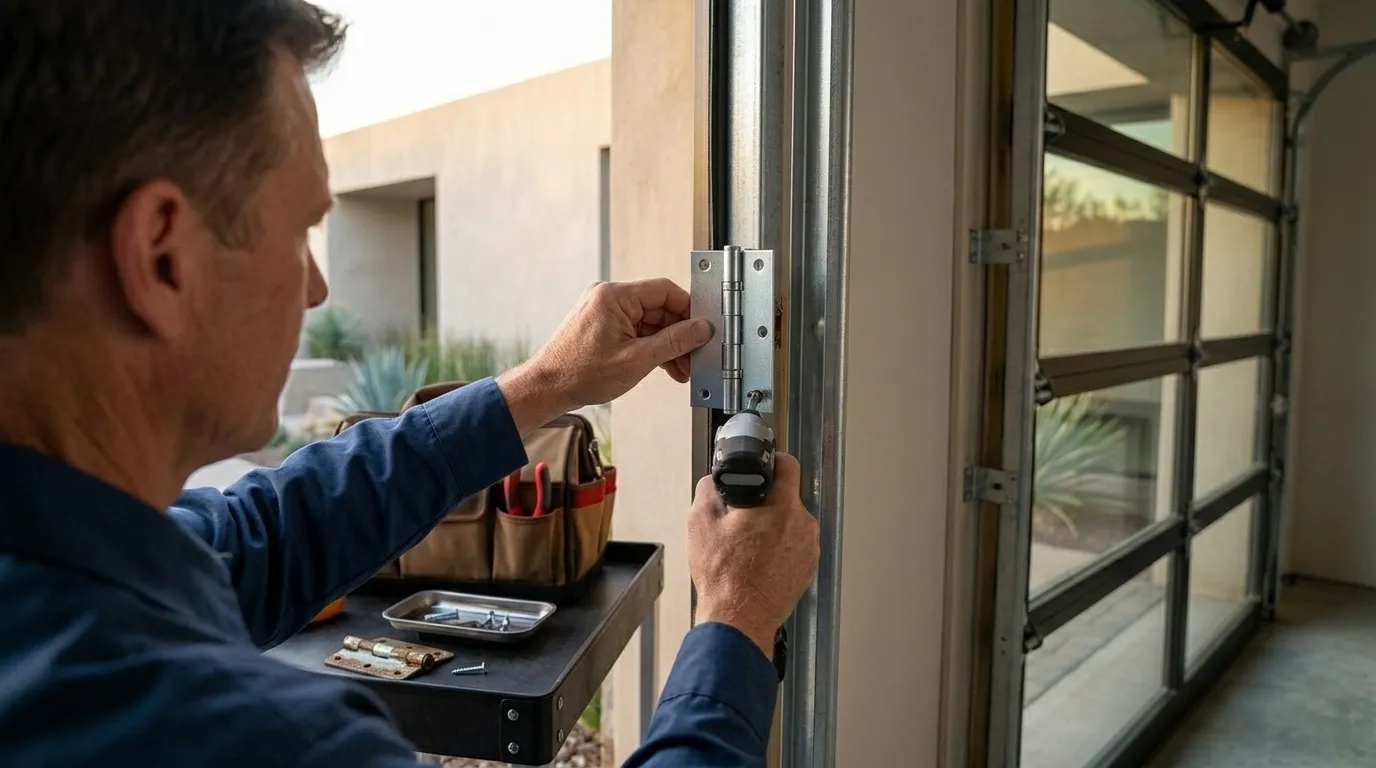
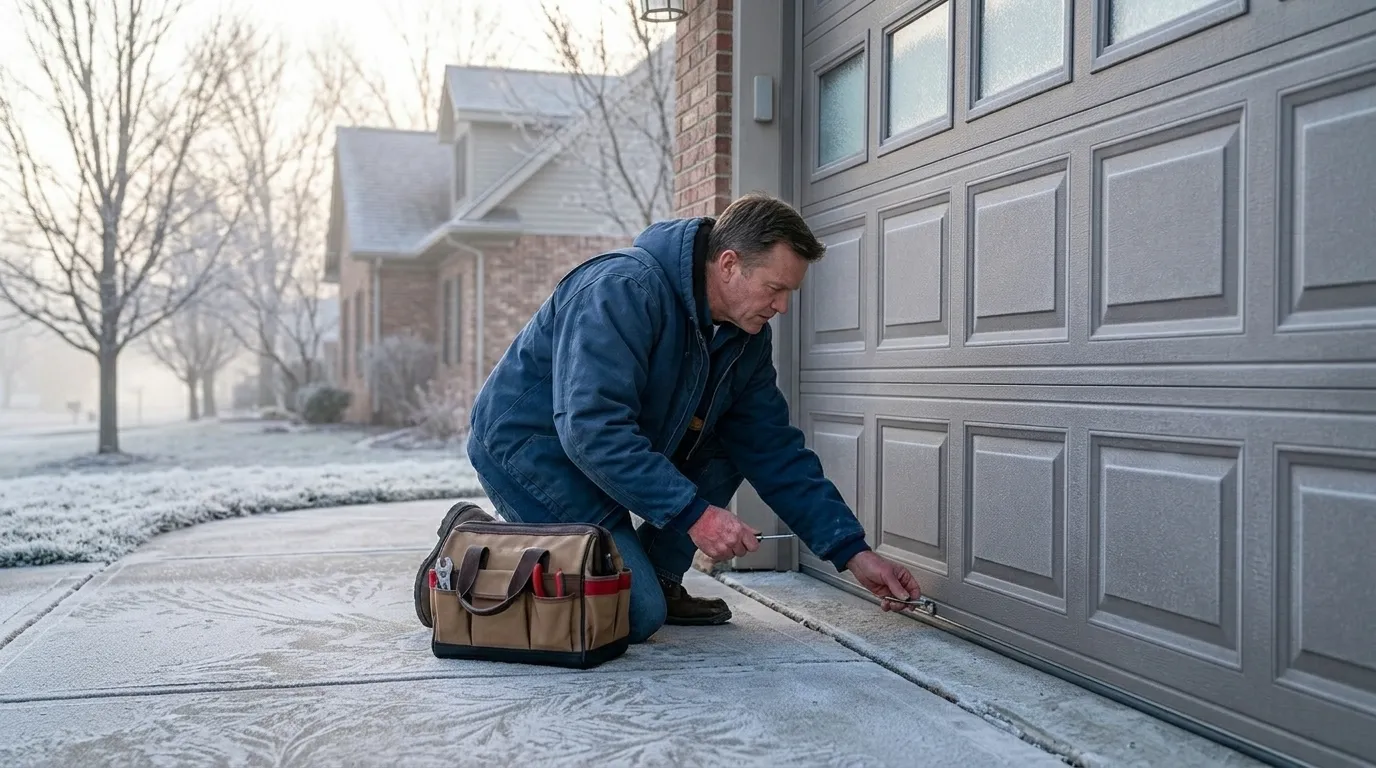
The service area sits in a moderate-cold climate band, and Washington's stock is old enough - 1970 median build year, against a broader area range of 1965 to 2001 - that a lot of the original steel track and drum hardware is still in place, never swapped out. Cold snaps stiffen the lubricant in old rollers and shrink steel just enough that a track already a little out of alignment starts binding. It's not dramatic damage, just friction working against hardware that was fine when it was new and tolerant when it was five years old, but isn't tolerant at fifty.
Combine that with 4,681 households in Washington on roughly the same building timeline, and you get a pretty consistent failure pattern across the town: worn rollers first, then cable fraying at the drum, then spring fatigue. It's predictable enough that we know what to bring before we knock on the door.
Stocked Parts
For doors from this era we carry standard rollers, lubricant rated for cold-weather use, and the common gauge of galvanized cable that fits 1970s drum sizing. Torsion springs sized to older door weights are usually a same-visit swap. What we don't carry on the truck is anything custom - a panel matched to an obsolete color or a track bracket pattern that a previous owner altered instead of replaced.
On a door this age in Washington, that's not rare. If your track hardware was modified at some point rather than kept original, we'll need to order the part rather than swap it on the spot, and we'll tell you that up front instead of pretending otherwise.
What the Fix Involves
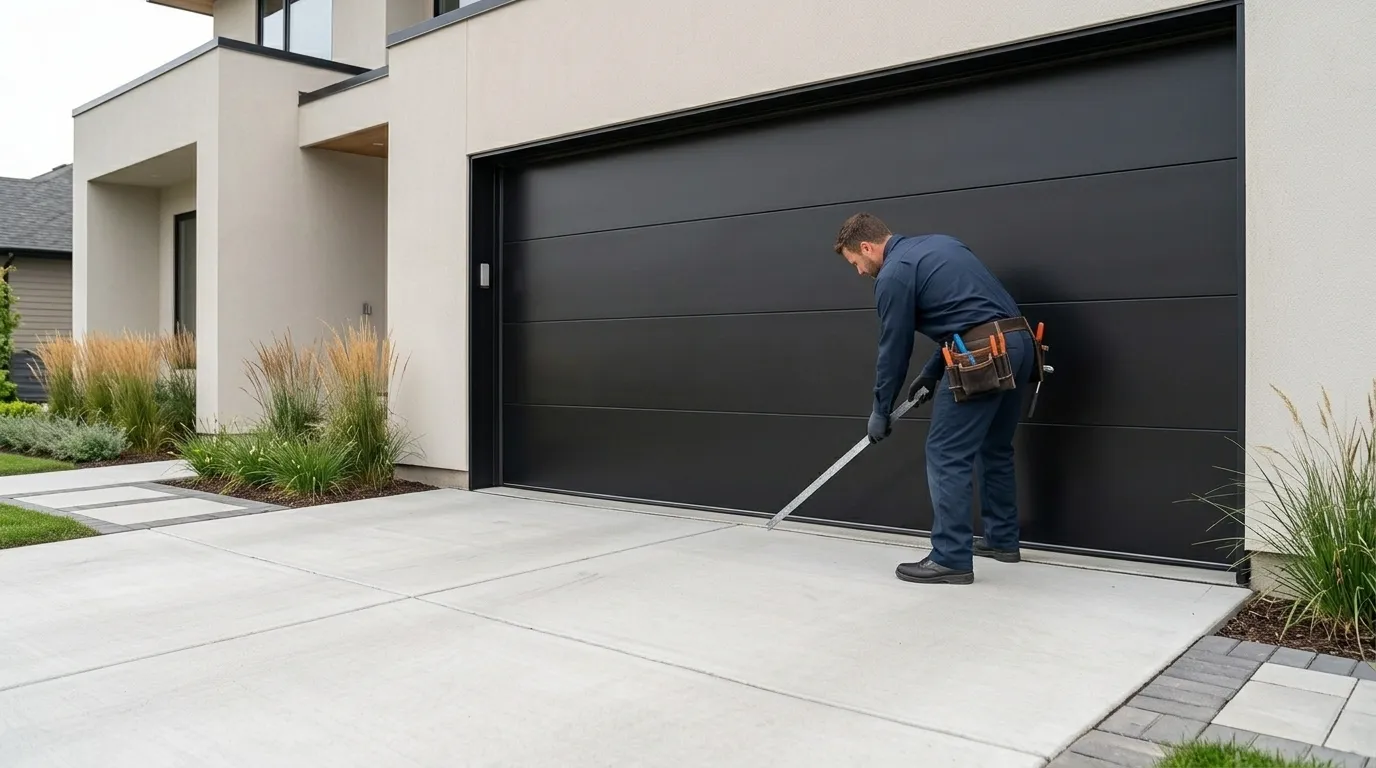
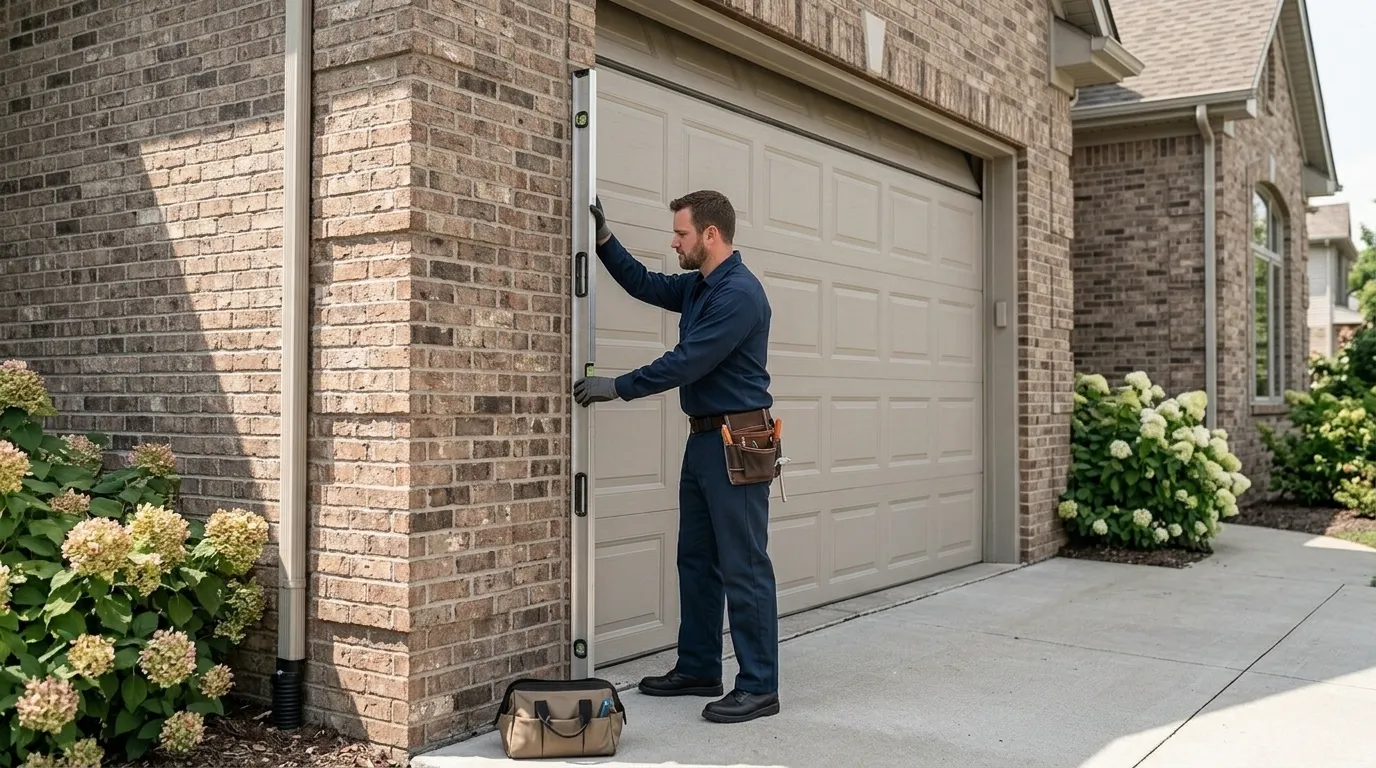
Most maintenance visits on a 1970-era door in Washington start with a full-cycle test: open and close slowly while watching the track for binding points, checking cable tension at both drums, and looking at the bottom bracket where fatigue shows up first. We re-lubricate everything that moves, not just what's squeaking, because on hardware this old a quiet roller can still be one winter away from seizing.
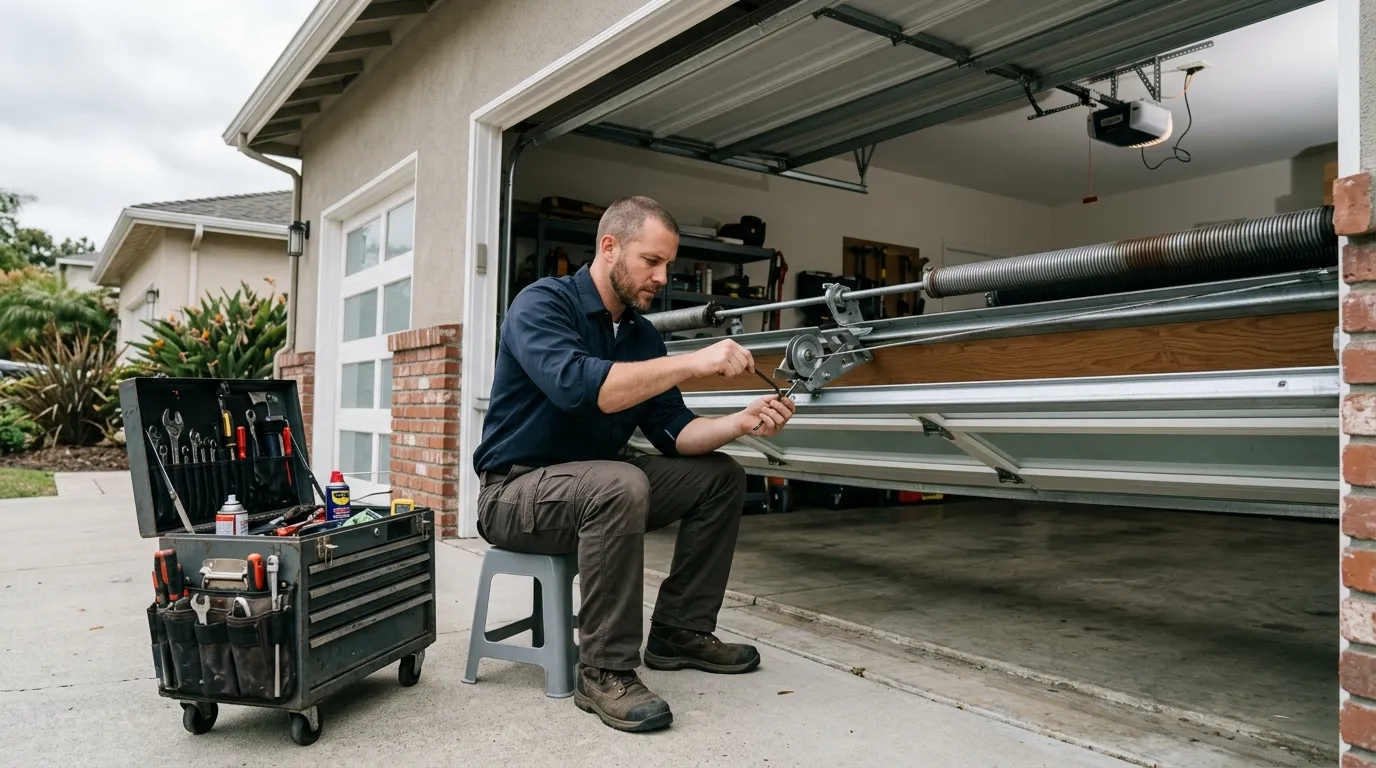
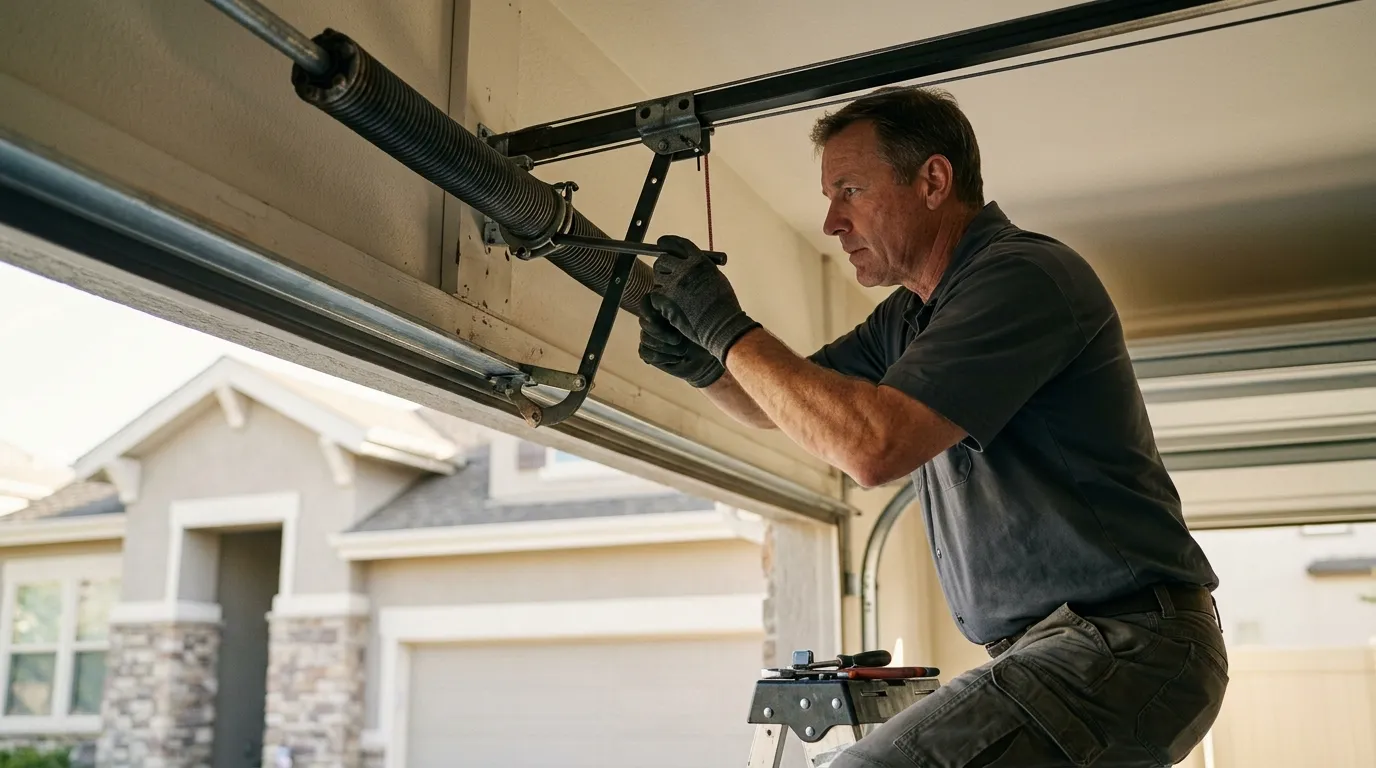
Spring tension gets checked against the door's actual weight, which on original steel panels is heavier than most people expect - guessing at tension on a door like this is how you end up with a snapped cable instead of a smooth one. If the opener has been replaced more recently than the door itself, which is common, we also check that the force settings still match the door's real weight rather than whatever the installer set years ago.
What Can Go Wrong
The main risk on a door this old is a spring that lets go mid-cycle instead of showing warning signs first - fatigue on original hardware doesn't always announce itself with noise. We check for that specifically rather than waiting for a customer to hear it. The other risk is track that's been bent slightly out of true by decades of use; it can look fine and still cause the door to bind under load.
Being honest about the limits here: if the door's structure itself - not the hardware - has warped or rusted through, maintenance won't fix that, and we'll say so rather than keep tuning up a door that needs replacing. On a door built in 1970, that's a real possibility, not a scare tactic.
Why Washington Calls Us
Other Garage Door Services in Washington
Talk to a Washington Technician First
Describe what the door is doing and get a straight answer on what it likely needs.
Recent Work in Washington
A look at jobs our crew has been on nearby.
Frequently Asked Questions
Is it worth maintaining a garage door this old instead of replacing it?
Usually yes, if the panel itself is sound. Most of what fails on a 1970-era door is hardware - springs, cables, rollers, track alignment - all things we can service or replace without touching the door panel. If the steel itself is rusted through or the frame has warped, that's a different conversation, and we'll tell you if we see it.
Do you keep parts on hand for older doors like the ones common in Washington?
Standard rollers, cable, and springs sized for older door weights, yes. What we can't stock is anything custom - a modified bracket or an altered track pattern from a past repair. Those need to be ordered, and we'll flag it during the visit rather than surprise you with it later.
How often should a door built in the 1970s get serviced?
More often than a newer door, mainly because the hardware has had decades to loosen or wear unevenly. We don't have a fixed local rule to quote, but once a year is a reasonable baseline for stock this age, especially through cold-weather months when stiff lubricant and shrinking steel make binding more likely.
Can I get same-day service in Washington?
We don't run a standing local crew in Washington the way we do closer to Greenville, so most visits get scheduled rather than same-day. If something's urgent, tell us when you call and we'll do what we can, but we'd rather be upfront about the 18-mile drive than promise a response time we can't guarantee.
Need Maintenance & Tune-Up in Washington?
Call now for straight answers on cost and timing.