
Service
Garage Door Spring Repair Around Greenville
Broken torsion spring on a house built in the 1965-2001 boom around Greenville, NC? Here's what fails, why, and how long the fix takes.
What Happens When You Call
-
1
Call or Request a Quote
Tell us what the door is doing and roughly how old the house is - that alone points us toward the likely part before a truck leaves.
-
2
On-Site Diagnosis
A tech checks the spring, cables, tracks, and opener in person and tells you plainly what is actually wrong.
-
3
Straight Price, No Surprises
You get a number before any work starts. It covers parts and labor, nothing added after the fact.
-
4
Fixed the Same Visit
Most repairs are done in one trip. If a part needs sourcing, we tell you that upfront instead of guessing.
How Long It Takes
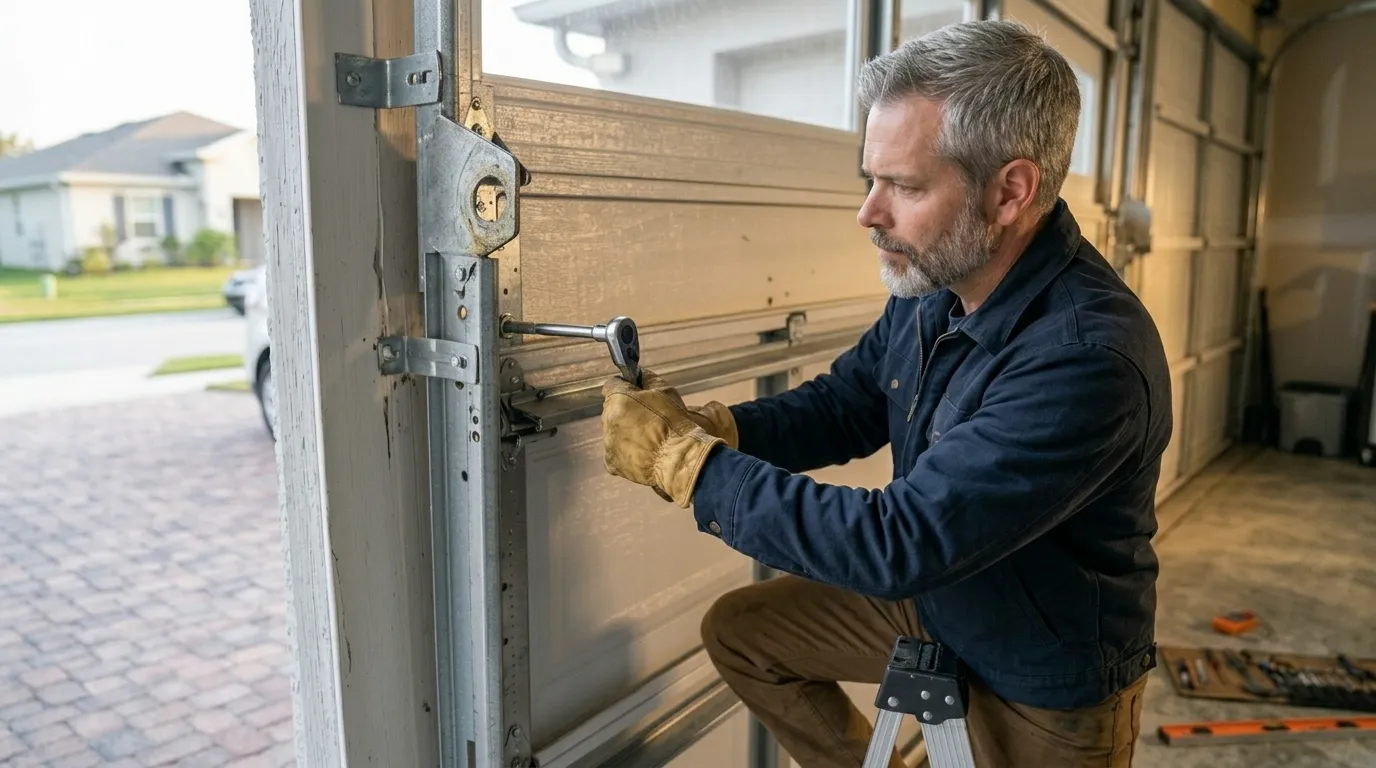
A straight torsion spring swap on a single door is usually a same-visit job once a truck is on-site - an hour or so once the old spring is off and the new one is wound to the right cycle count for your door's weight. Two springs on a double door takes longer, since we're balancing both sides and testing the cable drums together. What stretches a job isn't the wrench time, it's parts.
Most houses in this service area went up between 1965 and 2001, with the bulk of that stock dating to the 1960s and '70s across the eleven communities we run trucks through. Those older doors sometimes carry spring sizes or drum styles that aren't sitting on a shelf anywhere close, and we have to order to match. If your door is original to a house built in that window, tell us the age up front - it changes what we bring on the first trip and can save you a second one.
We'd rather show up with the right spring than the fast one.
What You Are Seeing
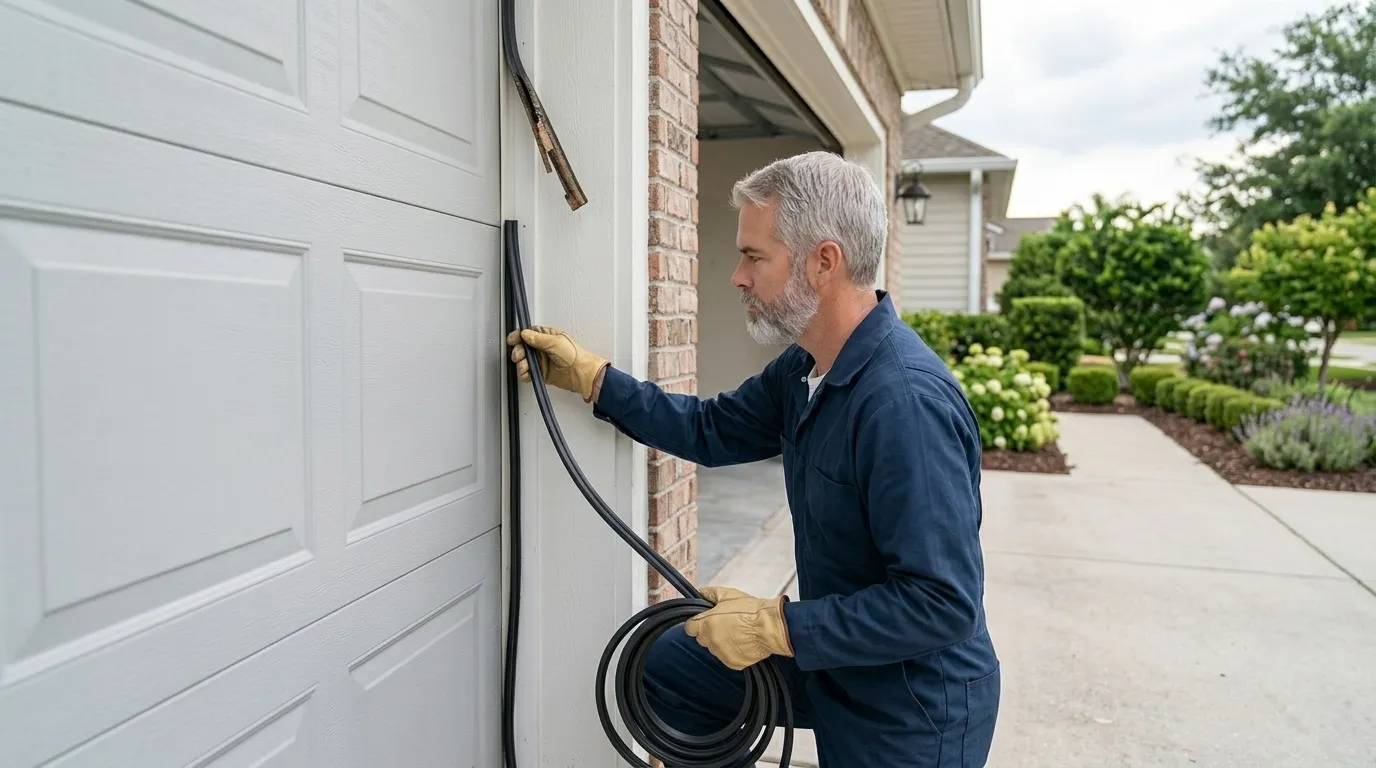
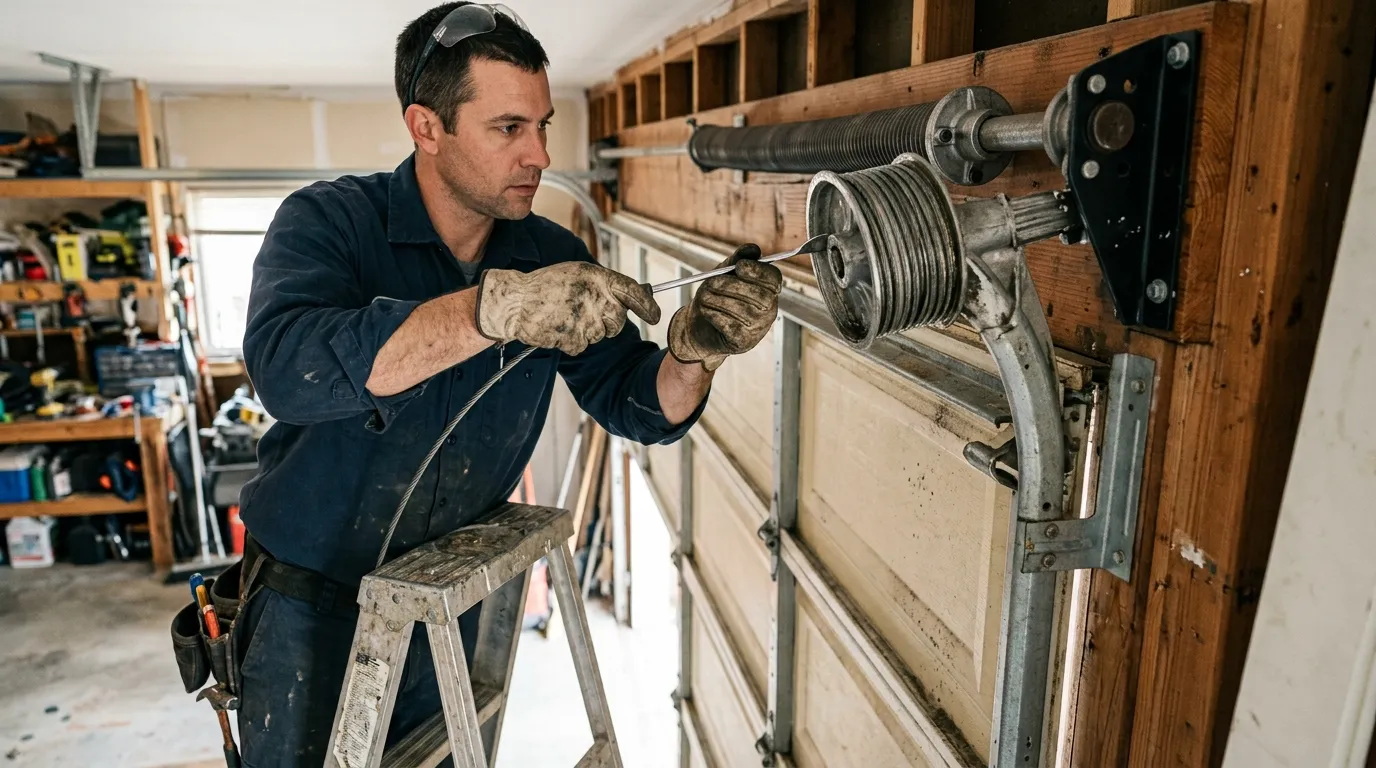
A snapped torsion spring almost always announces itself the same way: a loud bang from the garage, sometimes mistaken for a car hitting the door, and then a door that either won't lift at all or feels like it weighs three hundred pounds when you try by hand. Look up at the spring bar above the door - a broken spring shows a visible gap where the coil has separated. Extension springs (the kind stretched along the horizontal tracks, common on older single-car setups) fail differently: the door may still lift partway but slam down hard, or one side droops while the other holds.
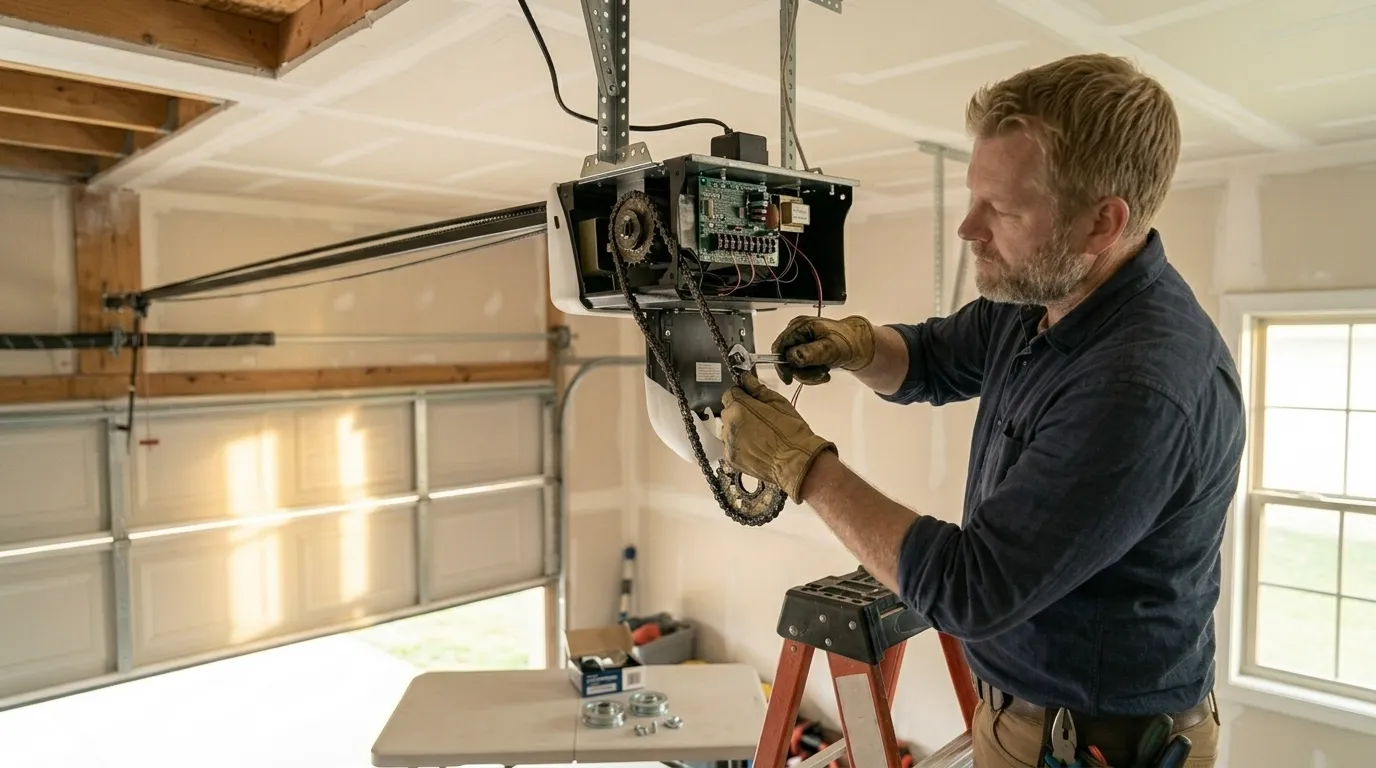
Either way, the opener isn't the problem even though it's what people blame first. An opener motor straining against a dead spring will eventually burn out trying to do the spring's job, which turns a spring call into an opener call if it sits too long.
The DIY Question
Torsion springs are wound under enough tension to break bones or worse if the winding bars slip - this isn't a job to learn on your own door. Extension springs are lower-risk to look at but still not something to rewire without the right safety cables in place. Where a homeowner can genuinely help: check whether the issue is actually the spring versus a jammed track or a dead opener battery in the wall switch, since that's a five-minute check that saves a truck roll.
We're straight with people about scope, too - if your door is old enough and worn enough that the drums, cables, and rollers all need attention at the same time as the spring, replacing the whole door assembly can end up cheaper over a few years than a spring-only patch. We'll tell you when we think that's the case instead of just doing the smaller job.
What Causes It Around Here
Torsion springs are rated for a cycle count, and cold, damp winters shorten that count because the steel contracts and the coil sees more stress per open-close than it would in a mild climate. This area sits in a moderate-cold band, not the deep-freeze zone, but it's enough seasonal swing that springs installed when a house was built in the 1965-2001 window are, by now, well past their rated life in a lot of the older sections we serve.
With over 8,700 owner-occupied houses across roughly 17,000 households in this service area, and most of that stock dating to the 1960s and '70s, we see the same failure pattern on a lot of streets: original spring, original hardware, thirty-plus years of cold-season cycling, and then one morning it lets go. Newer builds in the mix don't escape it either - springs wear on cycles and weather, not just calendar age.
Why Greenville Calls Us
Talk to a Technician Before You Book
Describe what the door is doing and get a straight answer on what it likely needs.
Jobs Like Yours
Recent work from this service line.
Frequently Asked Questions
How much does a garage door spring repair cost in Greenville, NC?
We don't post a flat number because it depends on whether it's one torsion spring or two, extension springs, and whether cables or drums need replacing at the same time. We'll give you a firm price once we've seen the door.
Why did my spring break with no warning?
Torsion and extension springs are rated for a set number of open-close cycles. Cold-season stress adds up faster than people expect, and once a spring nears the end of its rated life, it can go on an ordinary lift with no prior sign of trouble.
Is it safe to open the door manually after a spring breaks?
You can usually lift it by hand briefly to get a car out, but expect it to feel very heavy and don't leave it partway open unsupported. Get it looked at before running the opener again - that's what burns out the motor.
Do you carry spring sizes for older Greenville-area homes?
We stock common torsion spring sizes on the truck, but some older 1960s-70s hardware runs a size or drum style we have to order in. Tell us the approximate age of your door when you call so we can plan the trip.
Need Garage Door Spring Repair Around Greenville?
Call now for straight answers on cost and timing.