
Service
Keeping Older Garage Doors Running Through Another Cold Season
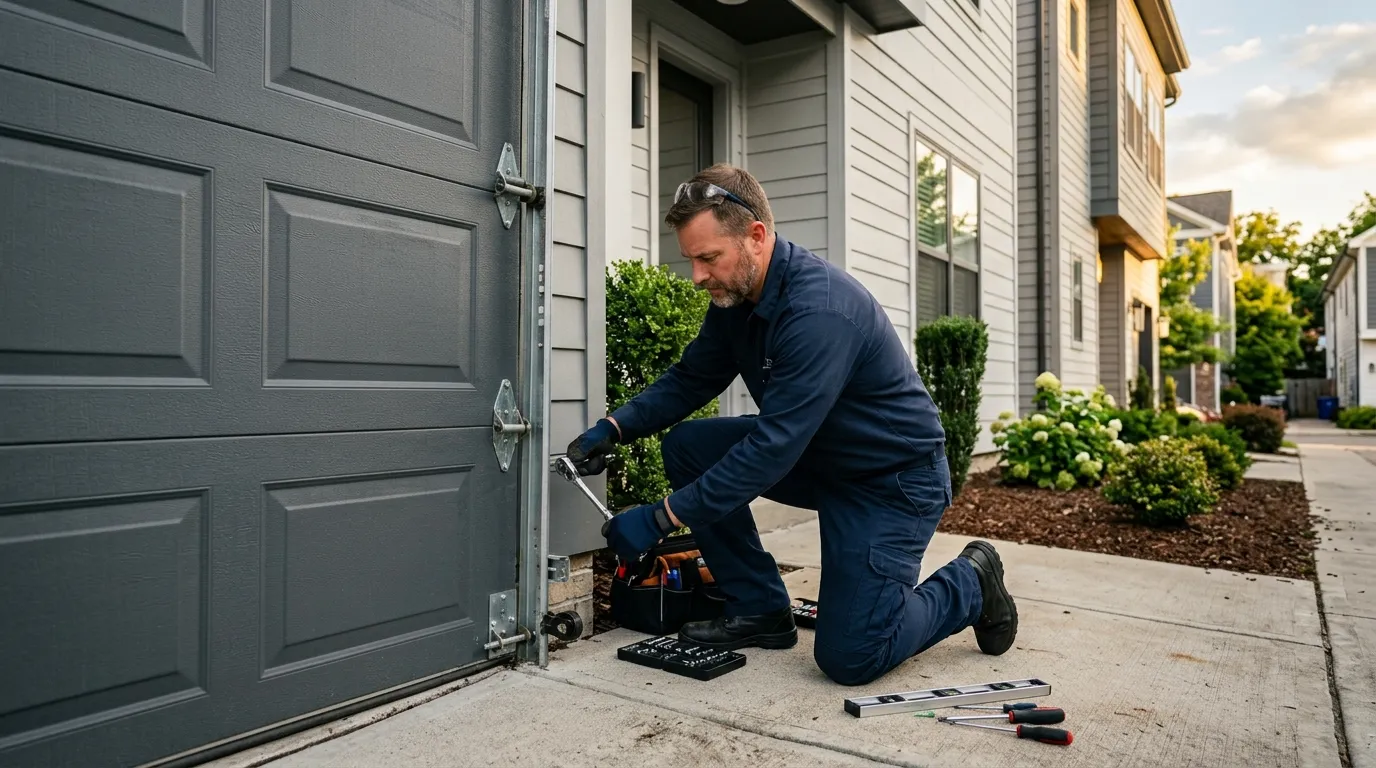
Garage door maintenance for Greenville, NC homes built mostly between 1965 and 2001. Tune-ups that catch worn hardware before a cold morning turns it into a lockout.
What Happens When You Call
-
1
Call or Request a Quote
Tell us what the door is doing and roughly how old the house is - that alone points us toward the likely part before a truck leaves.
-
2
On-Site Diagnosis
A tech checks the spring, cables, tracks, and opener in person and tells you plainly what is actually wrong.
-
3
Straight Price, No Surprises
You get a number before any work starts. It covers parts and labor, nothing added after the fact.
-
4
Fixed the Same Visit
Most repairs are done in one trip. If a part needs sourcing, we tell you that upfront instead of guessing.
How Long It Takes
A maintenance visit isn't a quick once-over with a can of spray lubricant. We check the spring tension, look at every roller and hinge for wear, test the cable condition, check the track alignment, and run the opener through its safety reversal test.
On a door that's had regular attention, that's a short list of adjustments. On a door that hasn't been touched since it was installed sometime in the 1965-2001 range that covers most of this area's housing, it's usually a longer list - rollers that should have been swapped years ago, a track that's walked out of alignment, hinges that squeal because nobody's ever oiled them.
We'd rather tell you up front that a 30-year-old door with worn-out rollers and a tired spring needs more than a tune-up. Sometimes maintenance turns into a repair conversation on the spot, because putting more life into hardware that's past its useful stretch isn't doing you a favor. That's the honest limit of what a maintenance visit can fix - it keeps a sound door sound, it doesn't rebuild a door that's already failing.
What You Are Seeing
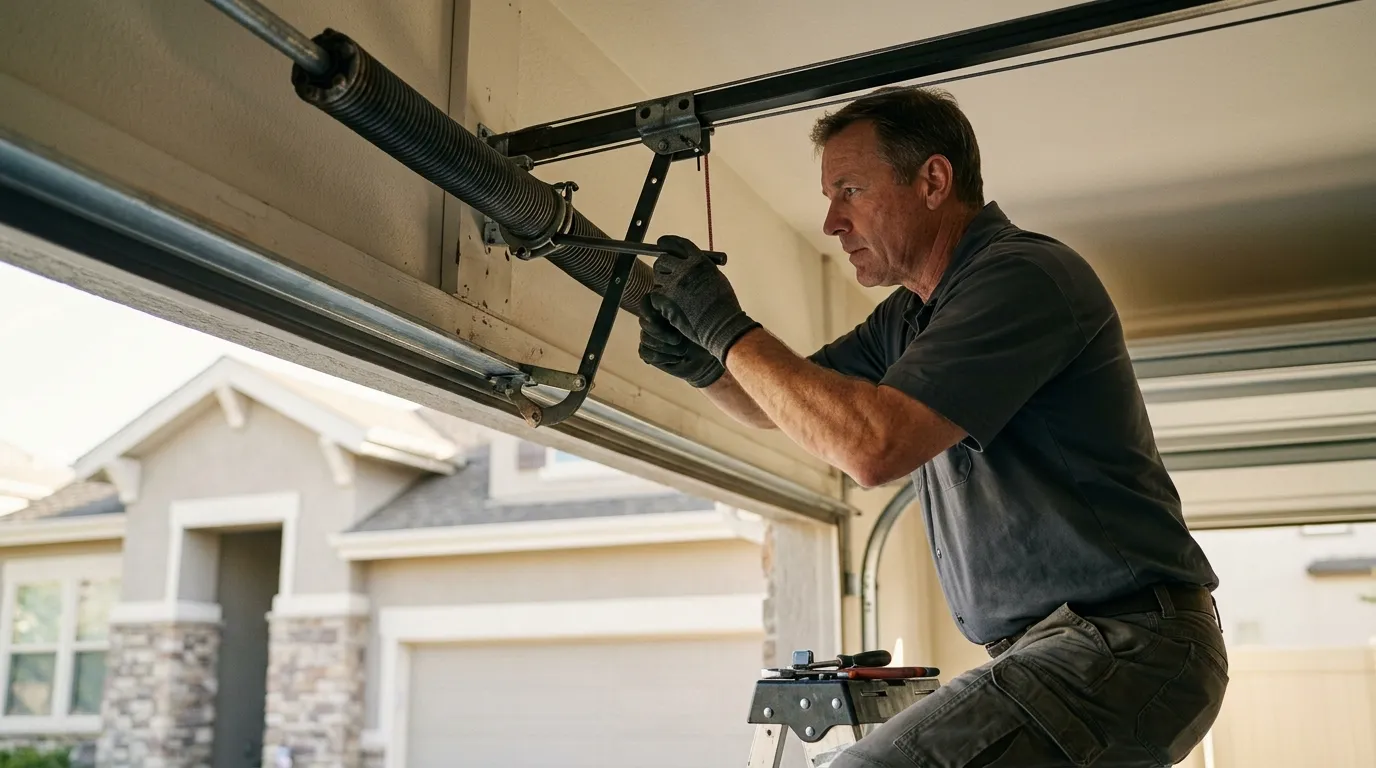
The signs are usually small before they're big. A door that used to glide now hesitates a few inches off the floor. The opener strains and makes a grinding noise partway through the cycle.
One side of the door dips lower than the other when it closes, which usually means the cable or the spring on that side has stretched or is losing tension unevenly. On a lot of the doors we look at in the eleven areas we serve, this shows up first as a slight shimmy at the top of the panel - a symptom of track brackets that have loosened over decades of use, not a broken part yet, just a warning that one's coming.
Rust at the bottom bracket or on exposed spring coils is common on doors in this housing-age range, since a lot of them have original hardware that was never rated for indefinite service life. None of these signs mean the door is done. They mean it's due.
The DIY Question
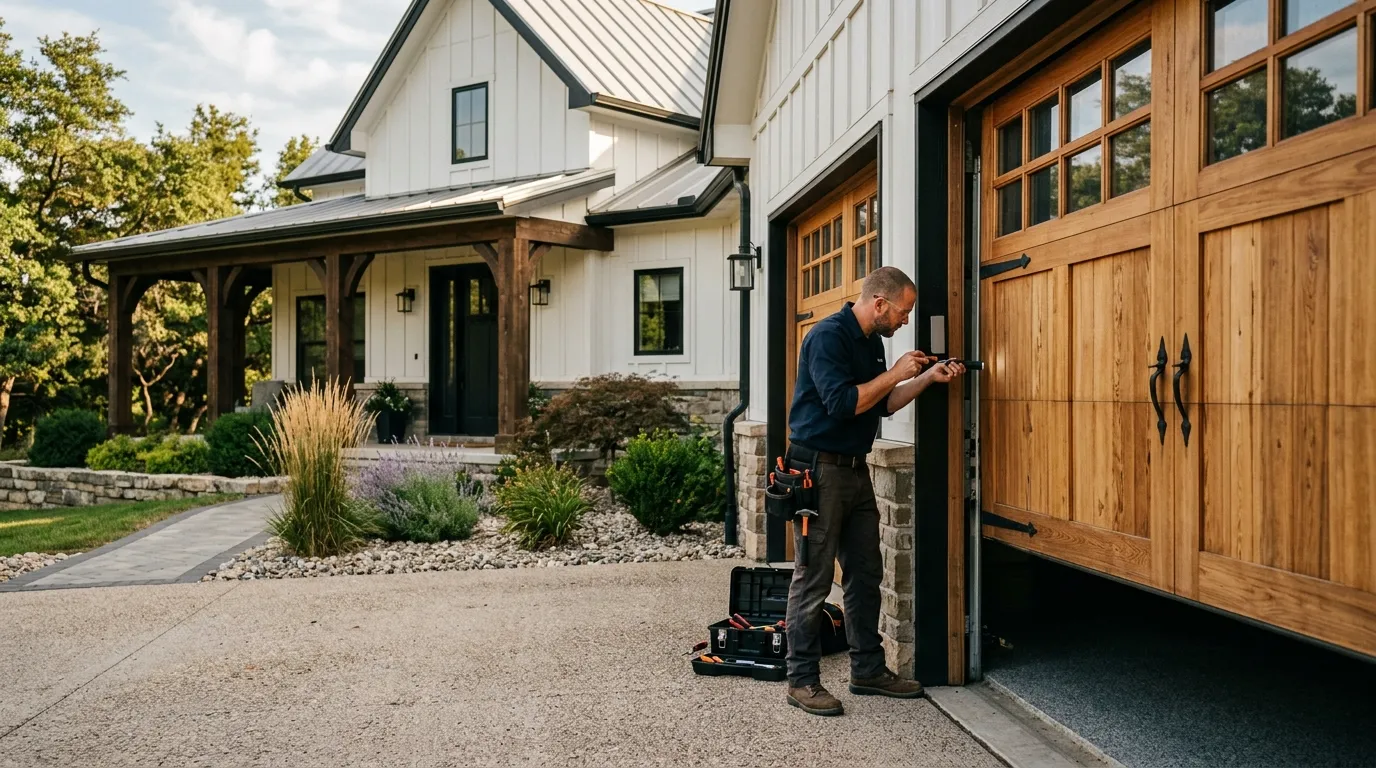
Some of this you can do yourself. Wiping down tracks, checking that the photo-eye sensors aren't knocked out of alignment, listening for new noises, and keeping the weatherstripping clear of debris - none of that requires a truck to show up. Lubricating hinges and rollers with the right product, not household oil, is also fine to handle on your own schedule.
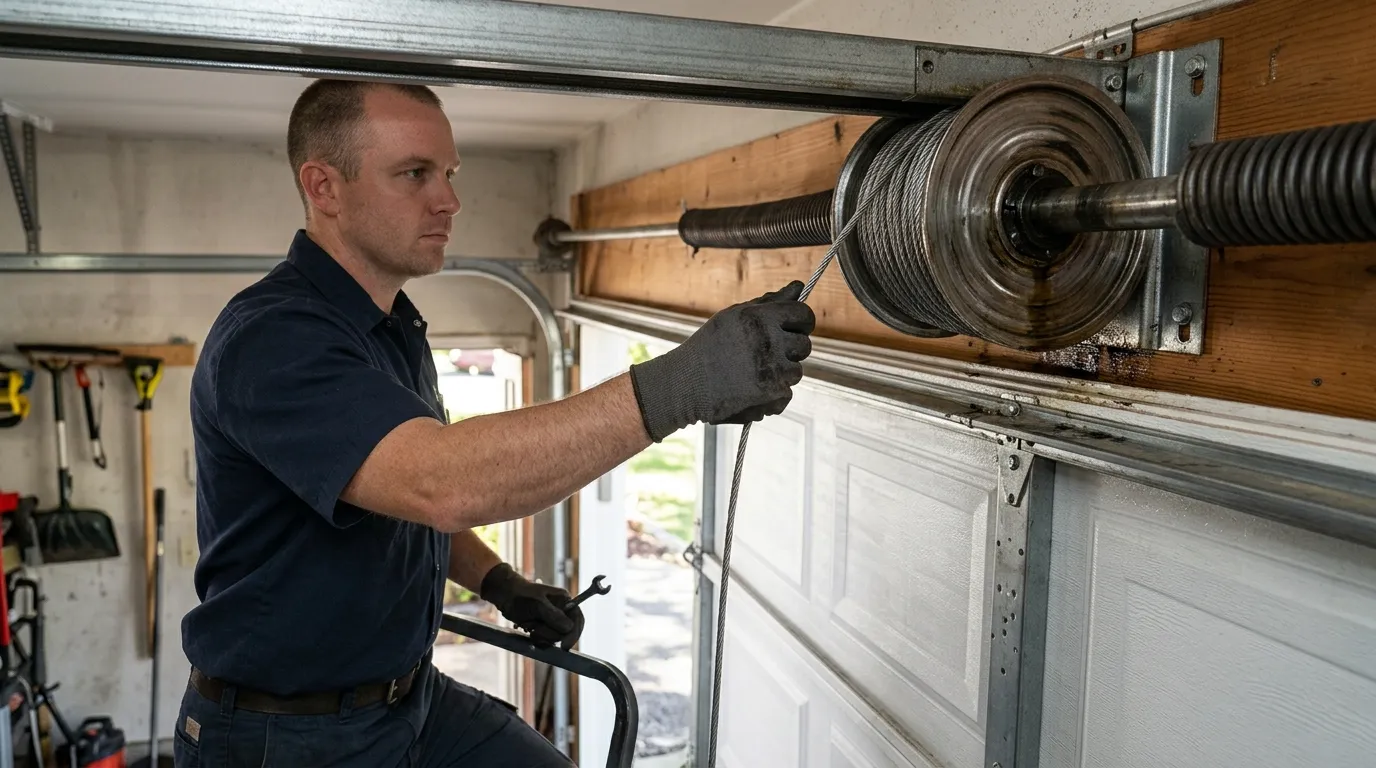
What we don't recommend touching yourself: torsion springs, cables under tension, or anything involving the drum and shaft assembly. That hardware is holding real force, and adjusting it without the right bars and clamps is how people get hurt, not just how doors get damaged.
If you're not sure whether what you're looking at is a wipe-down job or a spring job, that uncertainty is the answer - call it in. We'd rather walk you through what's safe over the phone than have you find out the hard way that a spring under tension doesn't forgive guesswork.
What Causes It Around Here
Most of the housing across this service area - the neighborhoods from Meadowbrook two miles north to Snow Hill twenty miles out - went up between 1965 and 2001, with a lot of it clustering around 1974. That means a huge share of the doors we service are running on hardware that's 25 to 50 years old, installed under building codes and material standards that have since been updated. Original torsion springs, single-layer steel panels, and hinges rated for a lighter door than what eventually replaced it are common in this age bracket.
Add the climate - this area sits in a cold-moderate band, with real winter cold snaps - and you get metal that contracts, lubricant that thickens, and springs that lose a little tension every cold season. A door that worked fine in October can bind in January simply because nothing's been serviced since it went in. With 8,732 owner-occupied houses among the 17,255 households across the area, that's a lot of original hardware still doing daily work it was never meant to do for this long.
Why Greenville Calls Us
Talk to a Technician Before You Book
Describe what the door is doing and get a straight answer on what it likely needs.
Jobs Like Yours
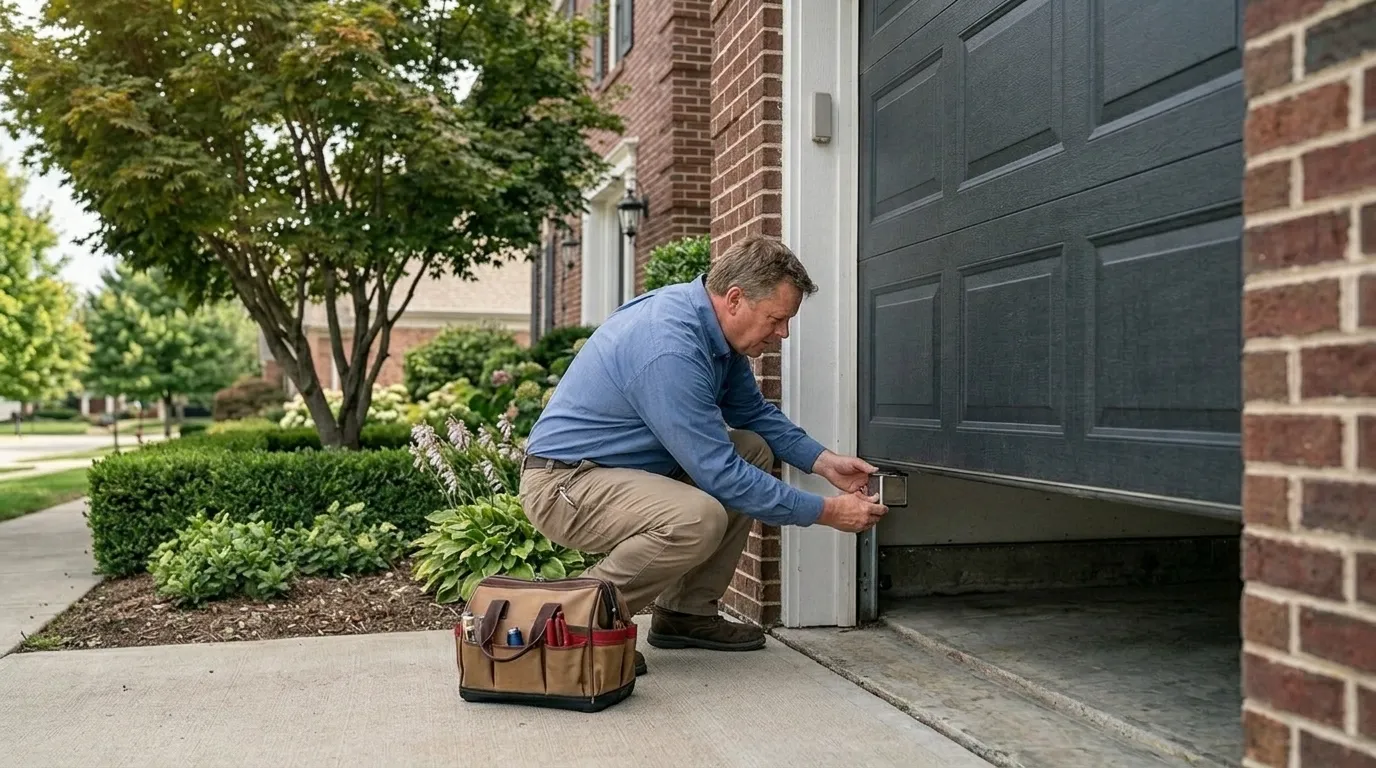
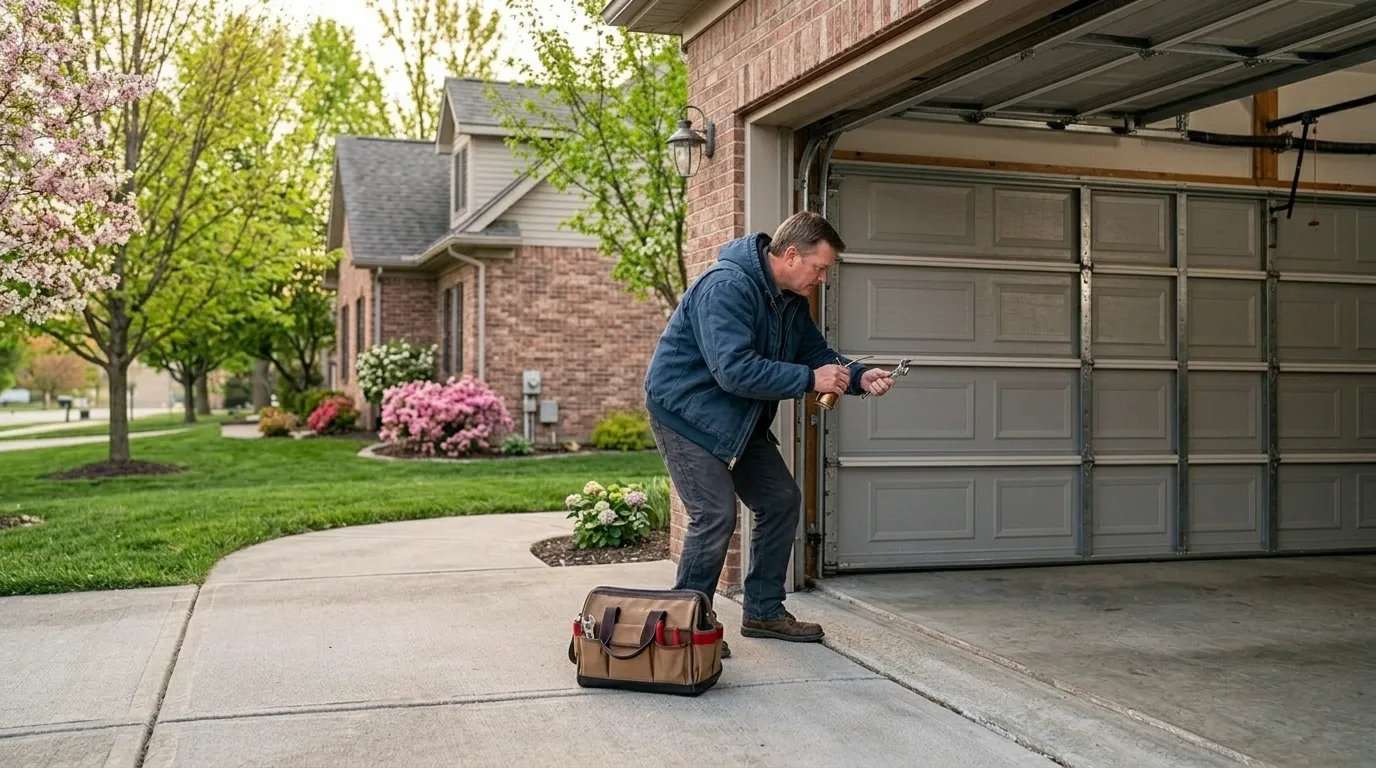
Recent work from this service line.
Frequently Asked Questions
How often should I get my garage door serviced in this area?
There's no single number that fits every door, but if your house was built in the 1965-2001 range that covers most of this area and the hardware is original, a check before winter and again in spring catches most problems while they're still cheap to fix. Doors with newer parts can usually go longer between visits.
Why does my door get stiff in cold weather?
Metal contracts in the cold and old lubricant thickens, so springs that are already a little worn lose more tension than they would in warmer months. In this cold-moderate climate, that shows up as binding or slow closing on the coldest mornings, especially on older torsion springs that haven't been adjusted in years.
Can I just replace the noisy roller myself?
Swapping a single nylon roller on a door that isn't under spring tension near that spot is manageable for a lot of homeowners. If the noise is coming from near the spring or cable assembly, or you're not sure which part is making the sound, that's worth a call rather than a guess.
Is maintenance worth it on a door this old?
Often yes - a tune-up on original 1970s-era hardware can add real years if the springs and track are still sound. But if the panel itself is rusted through or the springs are visibly stretched unevenly, we'll tell you honestly when replacement makes more sense than another repair.
Need Keeping Older Garage Doors Running Through Another Cold Season?
Call now for straight answers on cost and timing.